Why Alien's Ripley and Xenomorph Are Perfect for Dead by Daylight
Dead by Daylight still lacks the Alien franchise's Ripley and Xenomorph, a striking omission after its Stranger Things sci-fi crossover success.
The asymmetrical horror phenomenon Dead by Daylight has cemented its reputation as a sprawling museum of terror, bringing together iconic slashers, supernatural entities, and psychological nightmares under one foggy umbrella. Since its somewhat rocky launch in 2016, the Behavior Interactive title has undergone a remarkable evolution, transforming from a buggy experiment into a polished celebration of all things frightening. Through a series of high-profile licensing deals, the game has assembled a roster comparable to a horror equivalent of a crossover fighting game, inviting players to stalk or survive alongside legendary figures from film, television, and video games. Yet despite this ever-expanding gallery of monsters and final survivors, one glaring omission persists: the Alien franchise, specifically the resourceful Ellen Ripley and the terrifying Xenomorph.
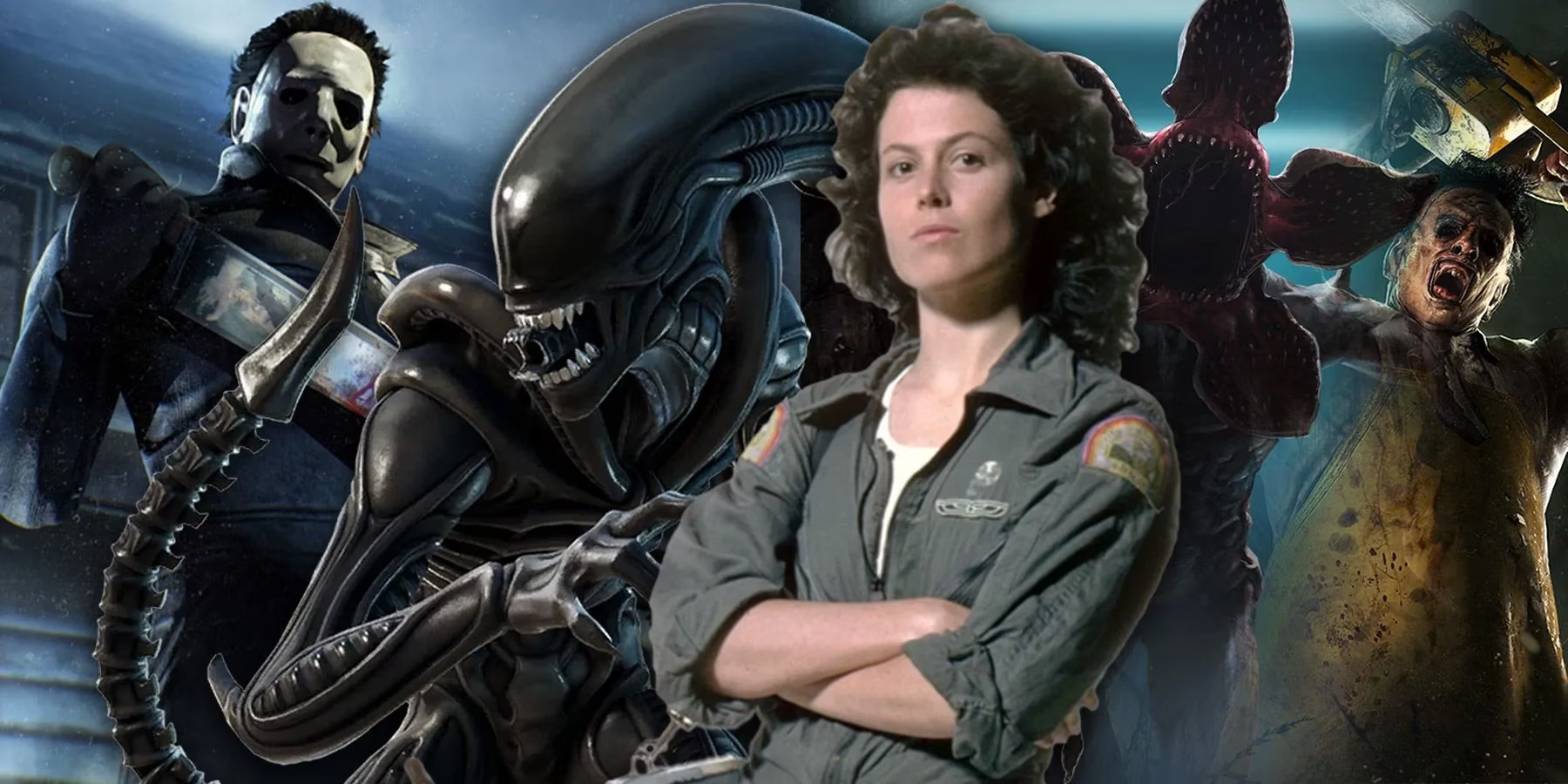
The absence of these characters feels particularly conspicuous when considering the depth and influence of Ridley Scott’s 1979 masterpiece. Alien redefined the boundaries between science fiction and horror, introducing audiences to a claustrophobic nightmare aboard the commercial towing vehicle Nostromo. Its slow-burn tension, anchored by the steady determination of Warrant Officer Ripley and the biological perfection of the Xenomorph, carved a permanent niche in popular culture. Even decades later, references to the chestburster scene, the ominous hum of derelict spacecraft, and the creature’s double mouth appear across every medium from animation to competitive online games. To include such foundational horror figures would not simply pad a character select screen; it would honor a lineage that shaped modern fear itself.
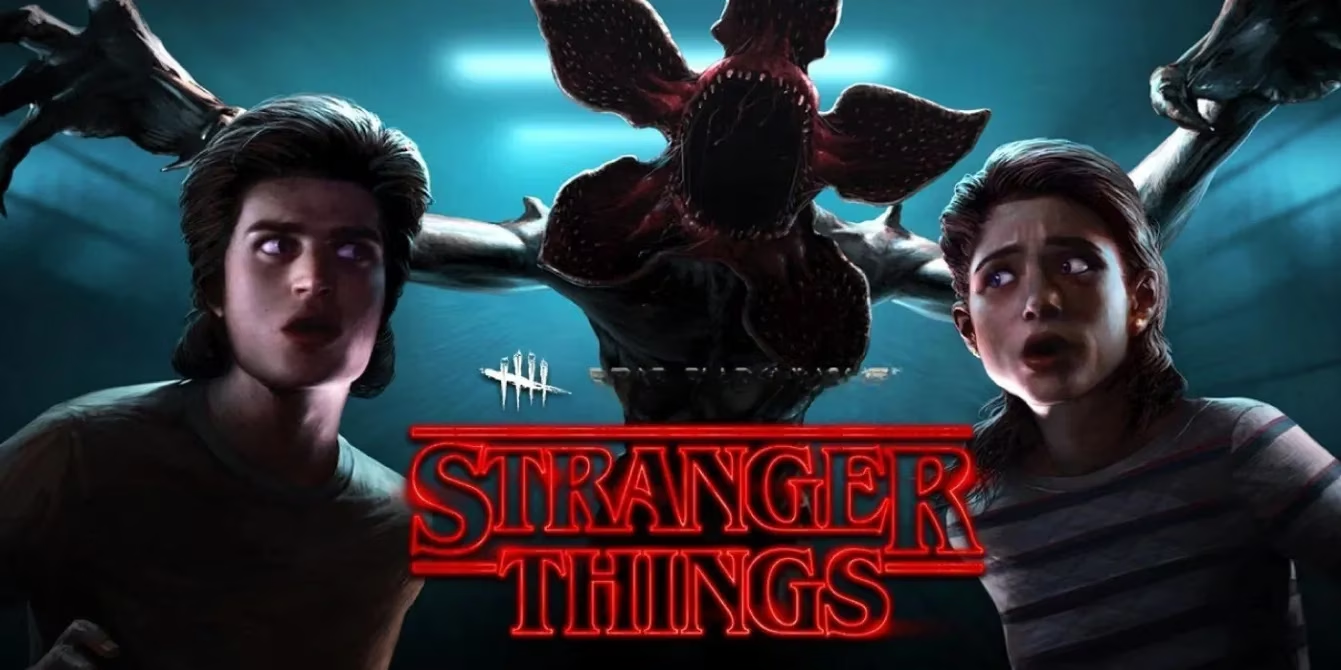
Dead by Daylight’s crossover history already demonstrates a willingness to venture beyond classic slasher archetypes. The inclusion of Stranger Things’ Demogorgon and the accompanying Hawkins National Laboratory map marked a pivotal transition, proving that the Entity’s realm could accommodate interdimensional threats and scientific anomalies alongside masked killers and vengeful spirits. This chapter blended supernatural horror with government conspiracy and alternate dimensions, laying the groundwork for even more ambitious sci-fi crossovers. While subsequent chapters returned to supernatural and folk horror, the door remained ajar for a franchise that marries cold, metallic corridors with an organism that embodies the terror of the unknown void. The Stranger Things experiment showed that Dead by Daylight’s player base eagerly embraces departures from haunted farmlands and decrepit asylums.
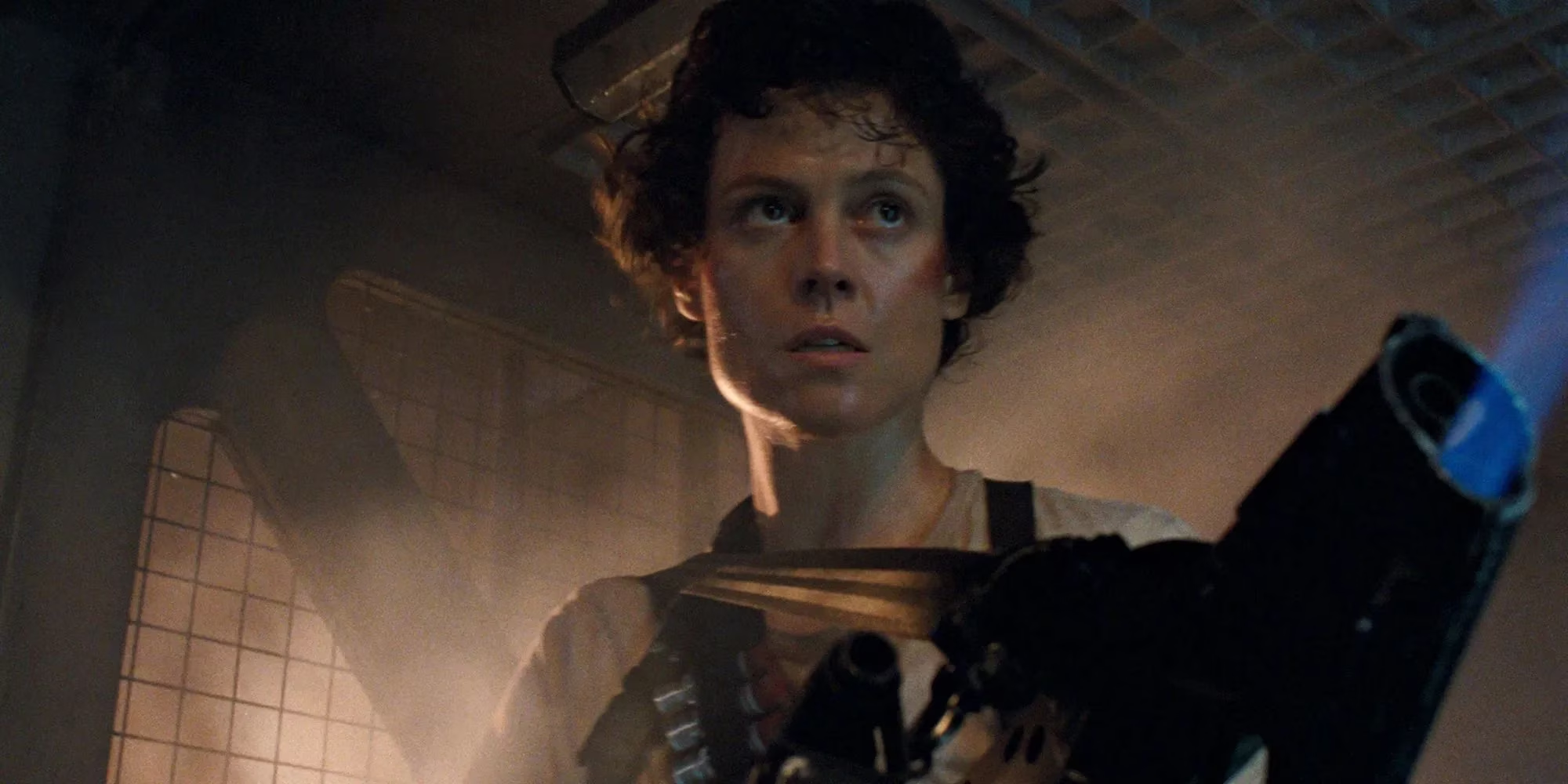
Integrating the Alien intellectual property would offer more than nostalgic fan service; it would introduce gameplay mechanics and environmental storytelling unlike anything currently in the fog. Imagine a new map set within the Nostromo or the Hadley’s Hope colony. The environment could feature tight, winding corridors littered with pulse rifles, motion tracker beeps echoing as ambient audio cues, and vent shafts that allow the killer to traverse vertically. Unlike the bucolic realms of Coldwind Farm or the cluttered rooms of Lereng’s Memorial Institute, an industrial starship interior would create a distinct spatial experience. Maintenance hatches, cryogenic chambers, and dripping reactor rooms would reinforce a sense of fragile isolation. Survivors might have to activate self-destruct sequences to open temporary exits, adding strategic layers to the standard generator repair objective.
Ripley herself could debut as a survivor with perks reflecting her ingenuity and resilience. One perk might grant visual hints when the killer enters a certain radius, emulating her tactical awareness. Another could allow her to weaponize environmental hazards like explosive canisters, recalling her use of the Nostromo’s systems against the perfect organism. Her signature white exosuit from the final act of the original film, or the rugged gear from subsequent sequels, would offer ample cosmetic variety. The Xenomorph as a killer would break the mold as well. Rather than relying purely on chase speed, it could employ stealth mechanics such as clinging to walls or ceilings for surprise pounces. Its power might involve planting Ovomorphs that spawn Facehuggers, which latch onto survivors and inflict deep wounds unless removed. These eggs could be hidden near generators, forcing survivors to scan carefully before progressing. Such a design mirrors the parasitic lifecycle central to the Alien mythos while creating tense, unpredictable encounters.
Beyond the core duo, the chapter could incorporate signature elements like the sinister Company—perhaps as a background faction represented in archives lore entries—or even an optional legendary skin transforming the killer into a Praetorian or a Queen morph. The potential for audio design is immense: the hissing exhalations of the Xenomorph, the haunting shriek of its inner jaw, and the pulsing rhythm of a motion tracker would immerse players in a sci-fi horror soundscape that stands apart from the creaks and whispers of existing maps.
In the broader landscape of gaming in 2026, Dead by Daylight continues to thrive precisely because it refuses to remain static. Each new chapter introduces fresh narratives and mechanical twists that recontextualize its core loops. The addition of the Alien franchise would not only plug the most notable gap in its horror mosaic but also invite a new demographic of sci-fi enthusiasts to embrace the asymmetrical format. By blending the cold, unforgiving space horror aesthetic with the Entity’s foggy domain, Behavior Interactive could craft a chapter that feels both nostalgic and revolutionary—a testament to a forty-year-old legacy that still strikes fear into the hearts of audiences. As the game marches toward its next evolution, the distress call from the Nostromo remains unanswered, but the opportunity to pick it up has never been more compelling.