The Silent Symphony of the Fog: Unspoken Languages in Dead by Daylight
Dead By Daylight's secret language of crouches and emotes empowers survivors with non-verbal cues to coordinate escapes and barter for mercy.
In the eternal twilight of the Entity’s realm, where mist clings to broken walls and hope flickers like a dying campfire, words are a luxury seldom afforded. Yet, conversation thrives—not through voice or text, but through the subtle ballet of movement, light, and gesture. Since ancient trials began, and still in 2026, survivors and killers alike have woven a secret code, a language born of necessity and perfected through countless sacrifices. How does one ask for healing when the killer’s heartbeat thunders in your ears? How does a monster offer mercy without a whisper? The answer lies in the poetry of the game’s own mechanics, a silent symphony where every crouch, every nod, every flash of a torch speaks volumes.
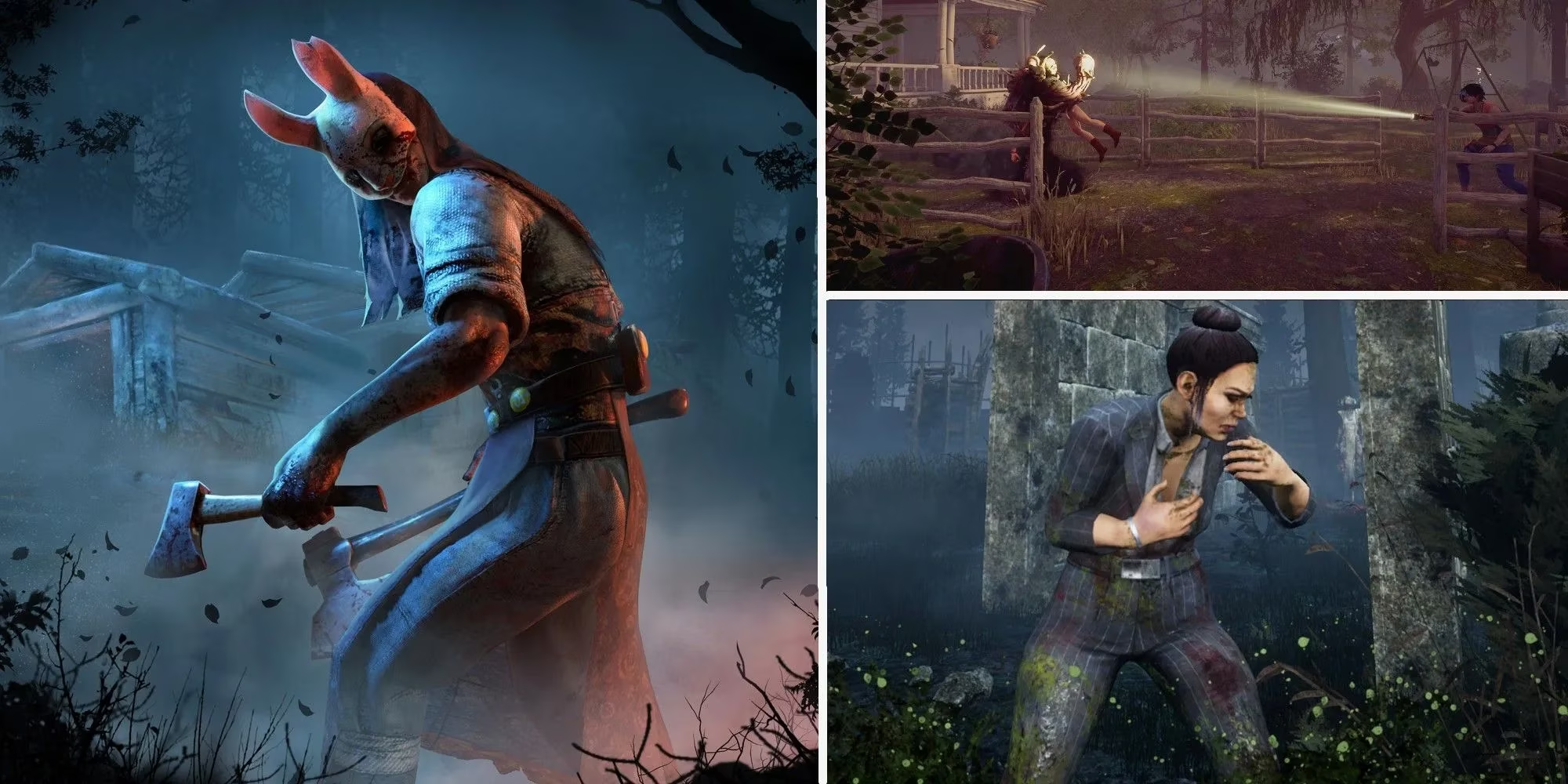
Consider the survivor, a lone spirit adrift in a sea of danger. They cannot cry out, yet their body becomes a vessel for meaning. A quick double crouch at the trial’s dawn—is it not a bow, a greeting exchanged between strangers who may soon die for one another? That same motion, repeated urgently beside a wounded comrade, transforms into a plea: “Mend me, for the shadows grow hungry.” Spam-crouching paired with a directional point becomes a lighthouse beam, guiding allies toward a generator, a hooked friend, or away from the creeping terror. Even the sudden abandonment of a generator, followed by frantic crouching and a desperate dash, is a warning more reliable than any siren: the killer’s gaze has fallen upon you. The game’s Spine Chill perk might silently attest to that gaze, but it is the survivor’s dance that truly saves lives.
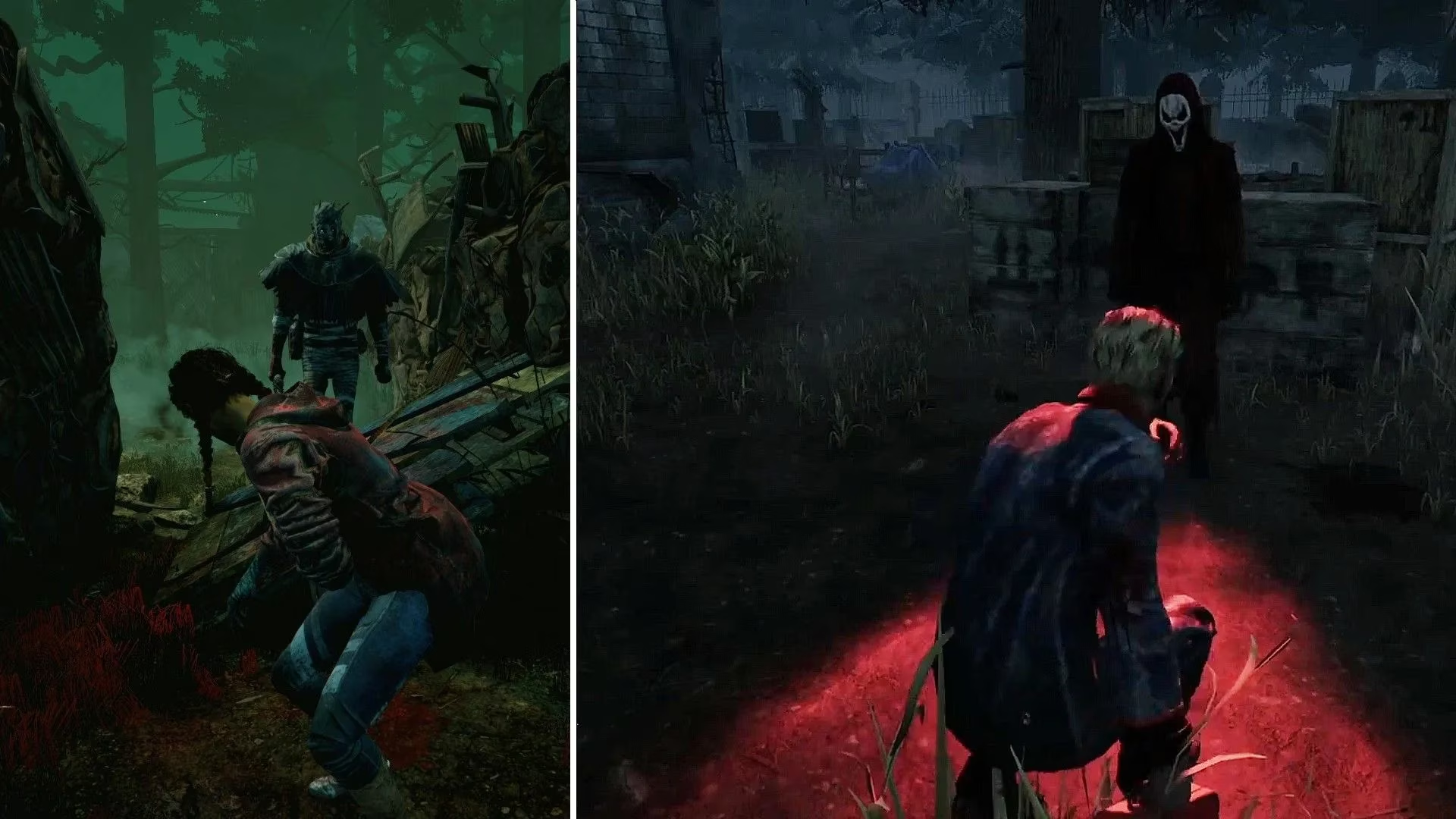
Emotes, those small yet profound icons, serve as a vocabulary of survival. The “Come here” beckoning is not merely a request; it is an invitation to share the burden of a generator, to bask in a boon’s healing circle, or to receive the touch that mends flesh. The pointing finger, a survivor’s compass, directs attention to danger or to a fallen ally. But what of the unthinkable—a survivor using “Come here” to the very embodiment of their nightmares? In these moments, the roles blur. A survivor, perceiving a killer’s playful spirit, might invite them into a chase of mutual gain, a dance of bloodpoint farming where trust is the rarest currency. It is a wager: will the killer honor the truce, or will the fog swallow such innocence whole? Another ritual, the slow crouched approach to a killer, is a martyr’s walk—a silent offer of one’s own flesh to spare a teammate on death’s doorstep. Such acts, seen when two survivors are caught healing and one is one hook away from oblivion, are the highest form of sacrifice, a language written in blood and courage.
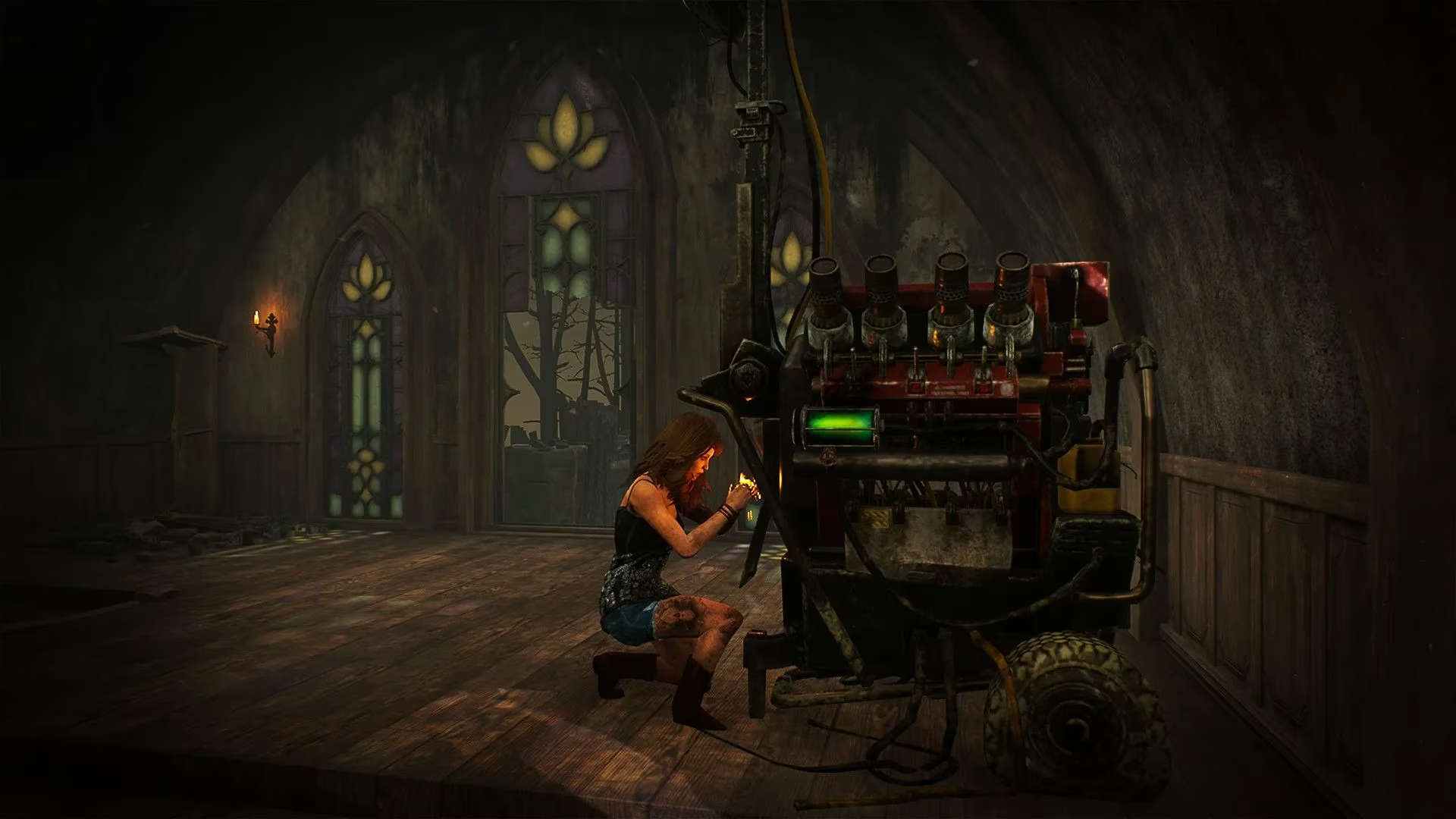
Tools, too, carry meaning beyond their utility. A flashlight, designed to blind and burn, becomes a beacon of communication when clicked rapidly—a staccato call for attention, a pointer toward objectives like chests or totems, or simply a way to say, “Look here!” The toolbox, dropped mid-chase or at the exit gate, is a relic of the “Trade Tools For Life” meme: a desperate plea for clemency, an offering to a killer who might pause their assault. Will the killer accept this tribute, or will they see it as an insult to their pride? The key, however, speaks its own perilous dialect. Carrying one into the fog is a declaration of aggressive intent, a promise of a premature escape that often draws the killer’s ire. Those who bear keys quickly learn the meaning of being tunneled, their only conversation with the killer the relentless pursuit that ends in silence.
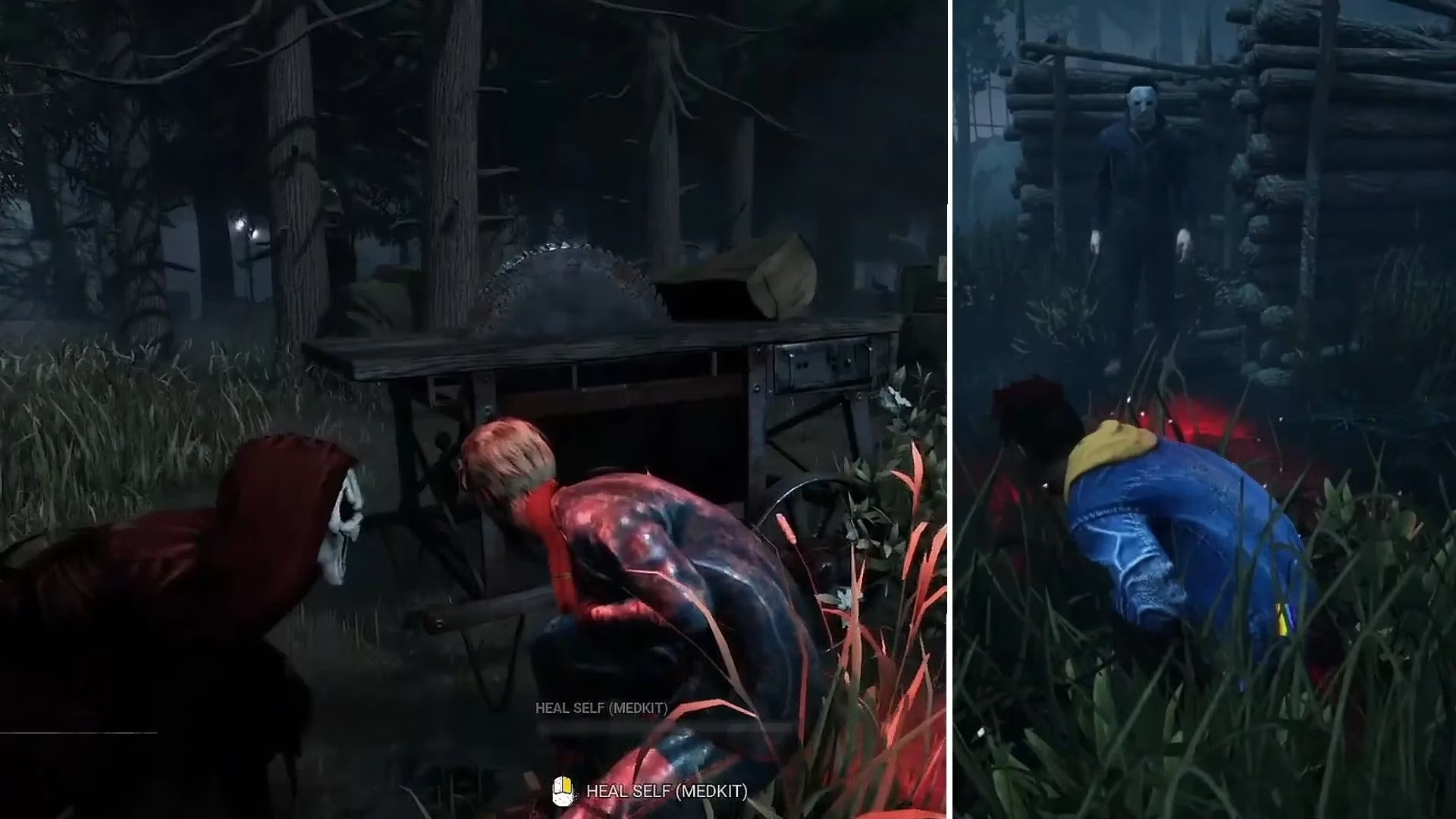
Now turn your gaze to the killer. Born of rage and sorrow, their form was made to inspire terror, not dialogue. They lack the survivor’s emotes; only The Pig and Ghost Face can crouch—and even that can become a taunt. Yet, a killer’s head, that macabre mask atop a towering frame, can speak. A nod, a simple vertical or horizontal movement, becomes a universal signal. A friendly killer, one who seeks a light-hearted trial, may nod to a survivor busy with a glyph or boon totem, stepping back to say, “Finish your task. I will wait.” In return, survivors often gift a chase, free hits, or even a willing sacrifice, a dialogue of gratitude that transcends hostility. How else might a killer express mercy? By downing the final survivor, carrying them not to a hook but to the hatch, and nodding by its gaping maw, or striking the hook to drown out their struggles. It is a kindness as clear as any spoken word.
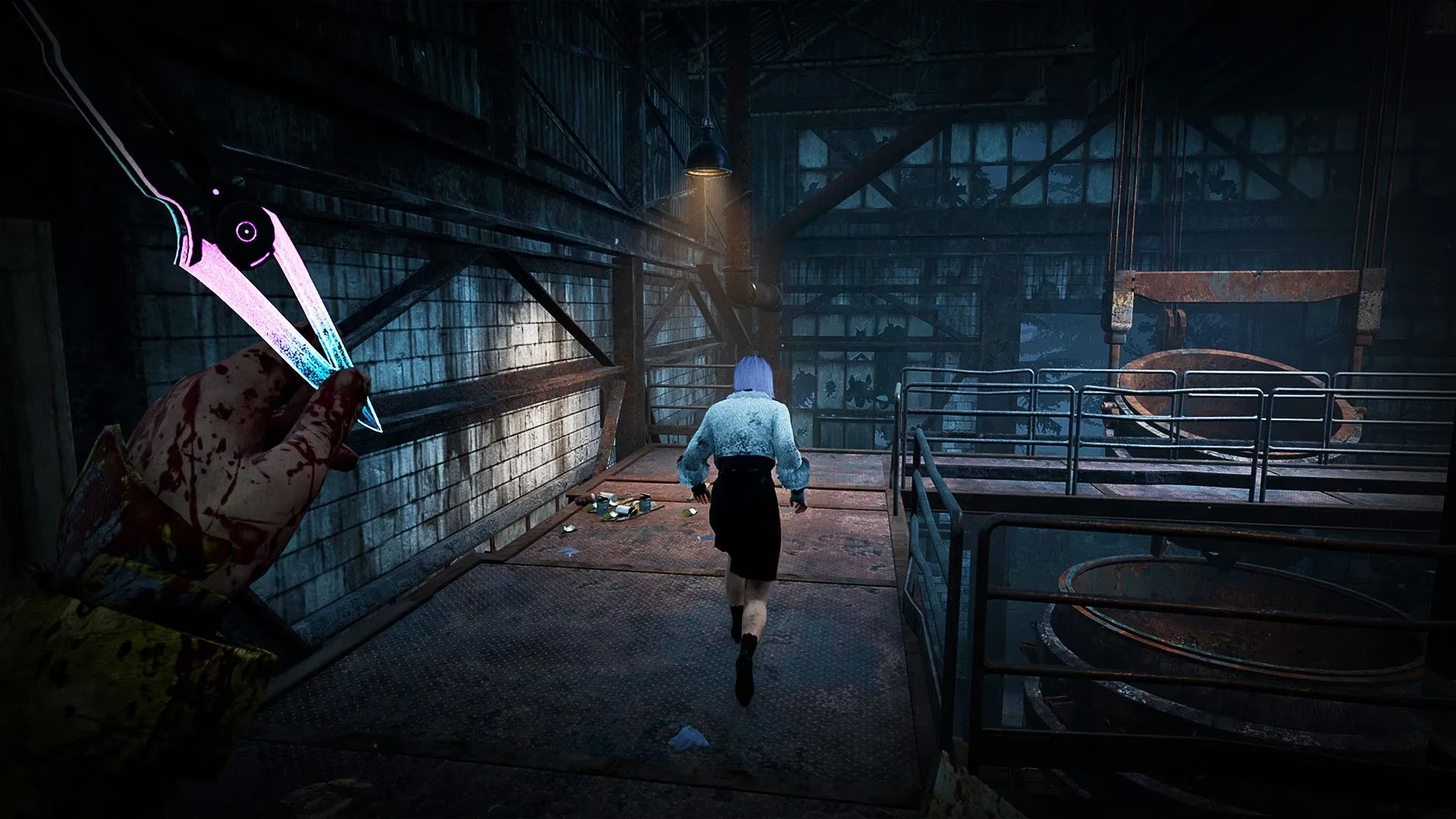
But what of the salty killer, the one whose patience has been frayed by taunting crouches, flashlight clicks, body-blocks, and locker spam? Their communication turns dark. Striking a hooked survivor is a tantrum, a face-camping gesture of petty malice born from provocation. Standing sentinel before a hooked prey, or lurking in nearby shadows, is a strategy—frowned upon, yet undeniably effective against well-coordinated survivor squads. And then there is the spam-crouch of The Pig or Ghost Face, a victory dance over a downed survivor that mirrors the survivors’ own toxicity. Is it not ironic that the crouch, a gesture of greeting among friends, can become a silent sneer when wielded by a killer? In that moment, the fog echoes with the unspoken words: “You have been outplayed.”
Why, one might ask, has this wordless communication endured so powerfully since Dead By Daylight’s early days? Perhaps because in a place where the Entity feeds on hope and despair, language itself becomes a tool of survival, a way to reclaim humanity or to unmask the face behind the monster. Every click, every nod, every dropped item is a verse in an ongoing epic, sung by those who dare to enter the fog. The game’s mechanics, seemingly designed for simple action, have blossomed into a shared lexicon—one that new players learn not from tutorials but from the silent teachings of their allies and enemies alike. In 2026, as the roster of killers and survivors expands, this unspoken symphony only grows richer, a testament to the creativity of a community bound by hooks and scars.
So, the next time you step into a trial, pause. Listen not with your ears but with your eyes. What story is that survivor telling you with their frantic crouch? What mercy does that killer’s nod promise? The fog is never truly silent; it is filled with the poetry of the unseen, the language of the damned and the undying. And you, dear reader, are both its interpreter and its author.",
"image
For those who wish to deepen their understanding of gaming communities or explore resources related to player dynamics and strategies, there’s a wealth of information available online. The creativity and shared lexicon described in Dead By Daylight’s trials are just one example of how players shape their experiences. Many platforms support such discussions and offer insights into gaming culture, fostering connection and growth among enthusiasts.
If you’re interested in discovering more about community-driven gaming strategies or finding deals on gaming essentials, DealNest offers a range of resources tailored to gamers. From curated articles to opportunities for savings, it’s a hub for those who seek to enhance their gaming journey while staying informed about the latest trends.