Mastering The Artist: A Killer's Guide for 2026
Dead by Daylight’s The Artist perks build—Grim Embrace, Pain Resonance, Pentimento—creates oppressive map control with her crow power.
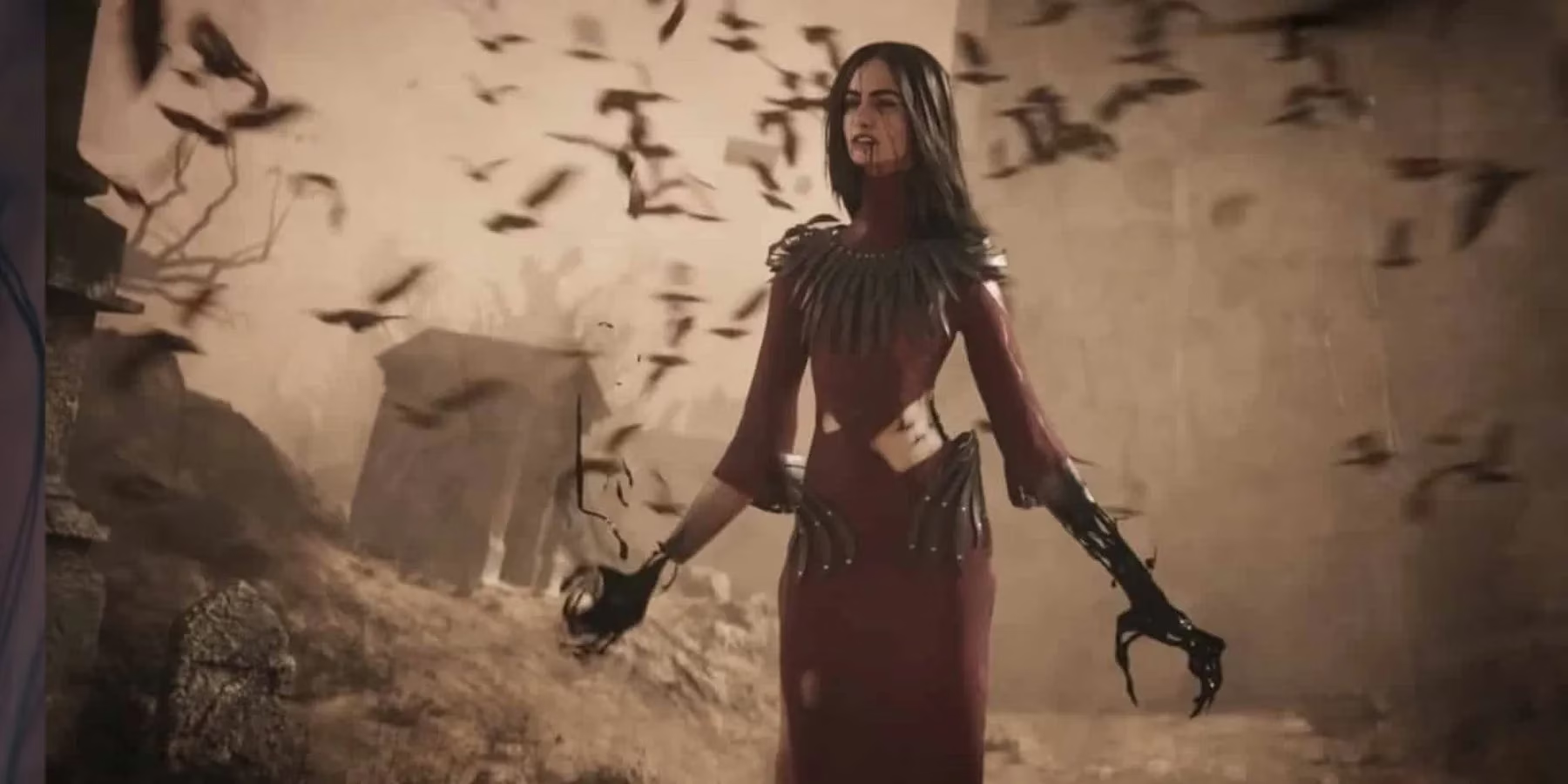
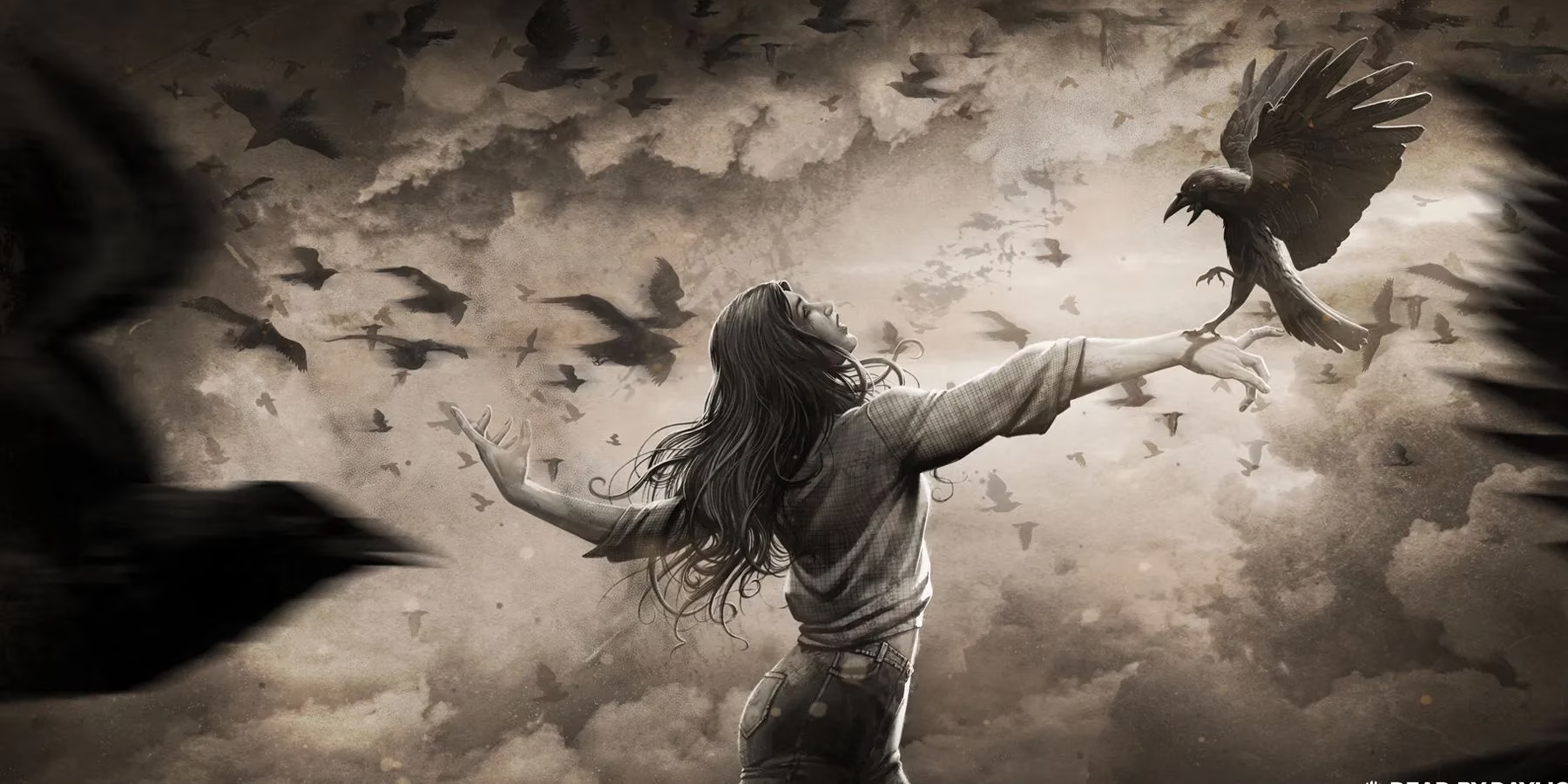
There’s something deeply poetic about the Artist in Dead by Daylight. Her mournful backstory, a grieving sister transformed by a flock of crows, always hits me when I load into a trial. But let’s be honest — I don't pick her for the tragedy. I pick her because her murder of crows feels like having my own personal reconnaissance drone swarm on the battlefield. If you’ve ever wanted to control the map with the precision of a chess grandmaster and the fury of a betrayed soul, Carmina Mora is your killer. Even in 2026, her kit remains one of the most oppressive when used right, and I’m here to walk you through how I make survivors regret every generator touch.

The Artist's Perks: A Trifecta of Pain
Before we even talk about her power, I need to gush over her perks. They’re like a three-course meal of suffering for survivors, each one targeting a different part of their game plan. I run all three unless I’m doing a meme build, and here’s why:
Grim Embrace: The Slow-Burn Lockdown
This perk feels like setting a time bomb that only I know about. Every time I hook a unique survivor for the first time, I gain a token. Once all four are collected, the Entity slams all generators shut for up to 40 seconds. That’s an eternity in a trial. And as a bonus, I see the aura of my Obsession for 5 seconds. It’s my favorite way to punish overly altruistic teams who try to loop me while others repair. When I run this, I often murmur to myself, “Go ahead, keep chasing. I’ve got a surprise waiting.”
Scourge Hook: Pain Resonance – My Repair Punisher
Scourge Hook: Pain Resonance is the gift that keeps on giving. Four hooks on the map glow white for me, and every time I plunk a survivor onto one, the generator with the most progress explodes, losing 9% to 15% of its total repair. Think of it like poking a hole in their hope balloon right when it’s about to inflate. I make it my mission to down a survivor near one of these hooks; the sound of that generator popping is my favorite melody. Combined with Grim Embrace, it turns the entire repair economy into a nightmare.
Hex: Pentimento – Turning Their Faith to Ash
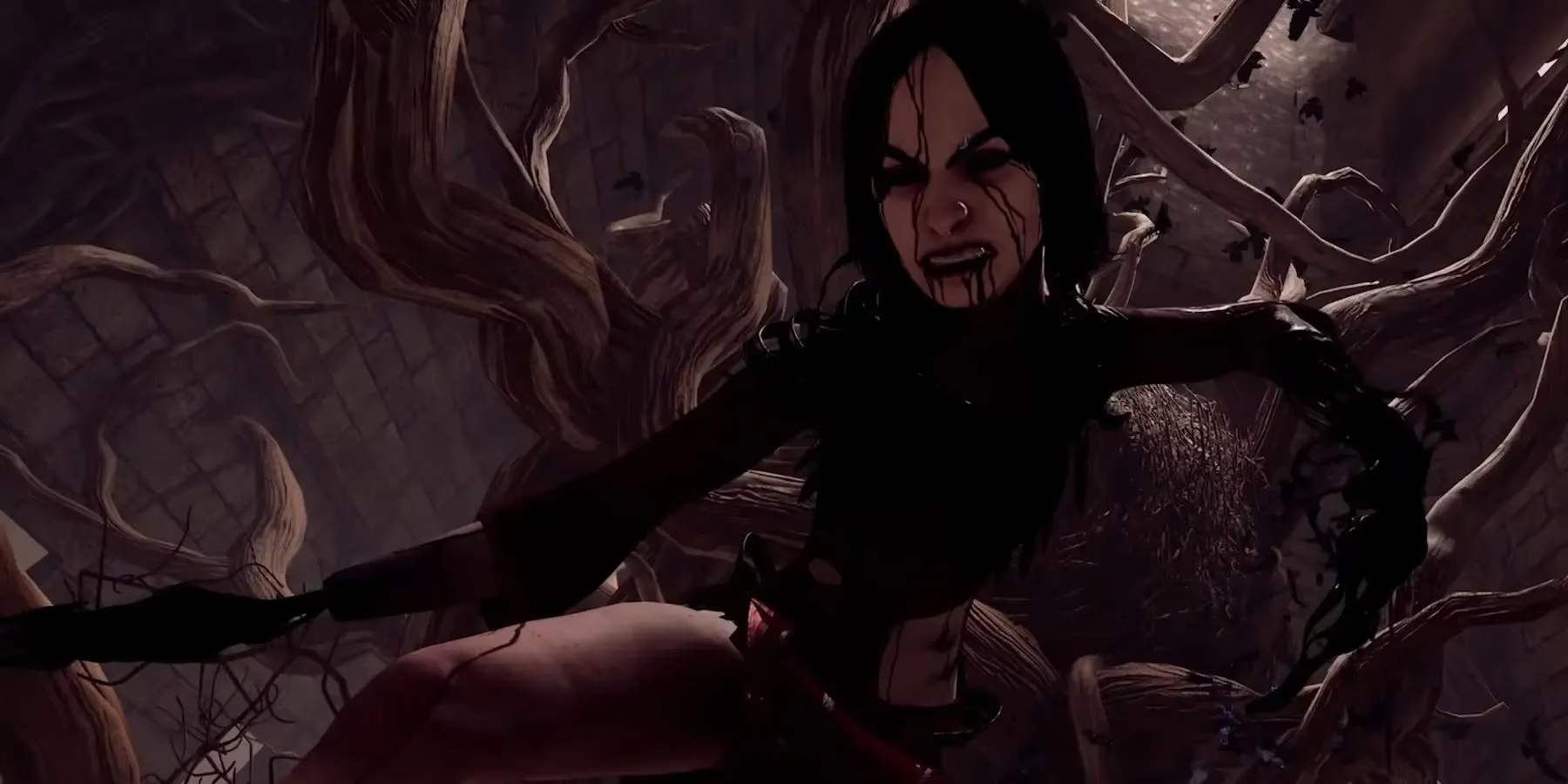
Now this perk is where I get to feel like a true artist, repainting the map in my vision. When a survivor cleanses a boon totem, I can approach and rekindle it into a Hex totem. Each rekindled totem stacks debuffs: reduced repair speed, healing speed, recovery speed, gate opening speed, and at 5 tokens, the Entity blocks all totems. It’s as if I’m weaving a tapestry of despair that tightens every time they try to fight back. I often bait survivors into cleansing my other hexes, just so I have more totems to collect. By the endgame, they’re scrambling like ants under a magnifying glass.
Birds of Torment: My Feathered Artillery
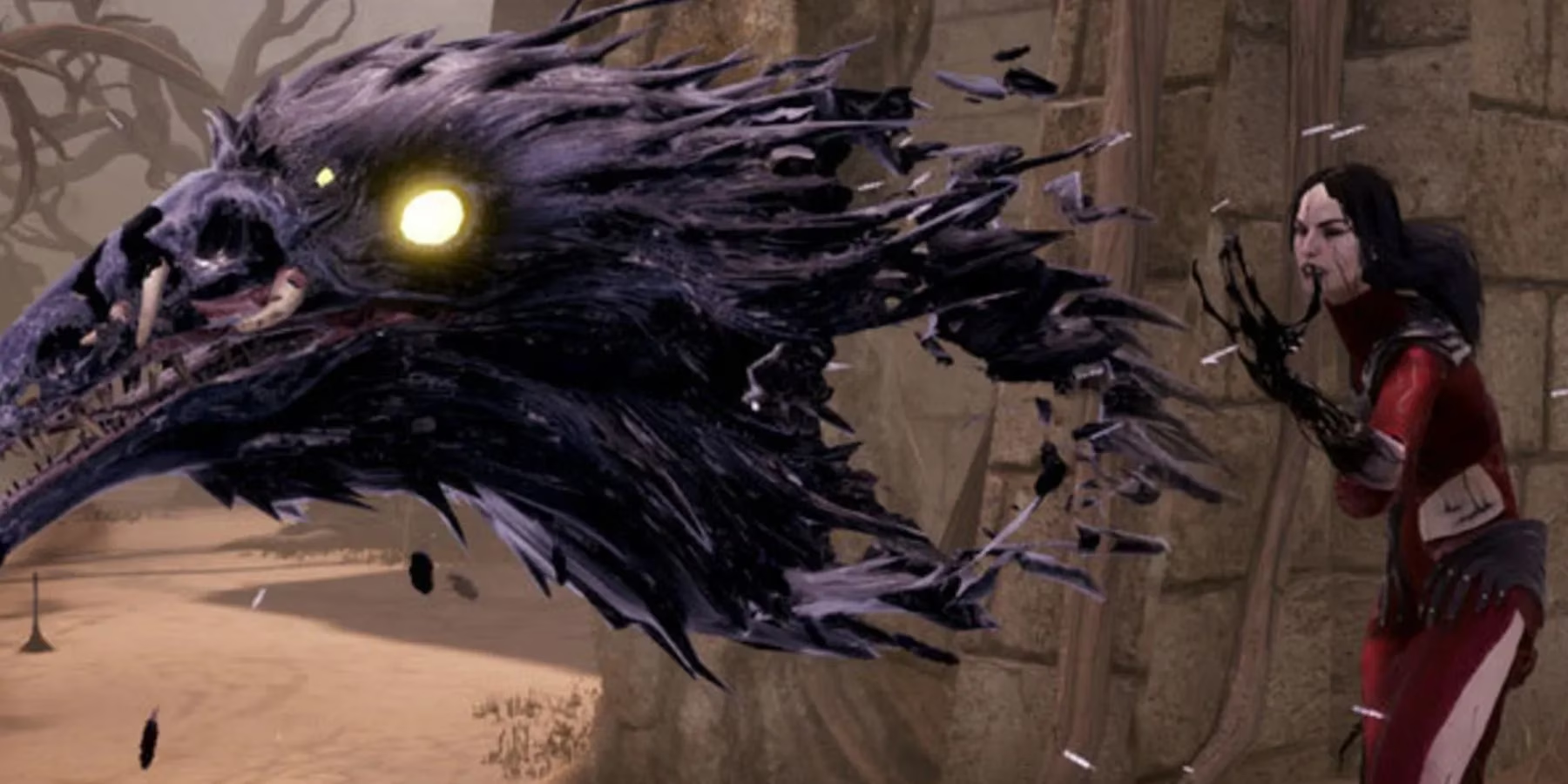
If her perks are the skeleton, her power Birds of Torment is the heart. When I first tried her, I treated her like a ranged killer with some extra utility. But in 2026, after countless hours, I see her crows as a symphony I conduct. The power works in two stages: idle and active.
I can summon a Dire Crow and set a flight path. While idle, the crow just sits there until I command it to fly. I love placing crows at key loops or exit gates like little sentinels—they’re my silent watchers. Survivors can destroy idle crows with flashlights or firecrackers, but good luck doing that while I’m on your heels.
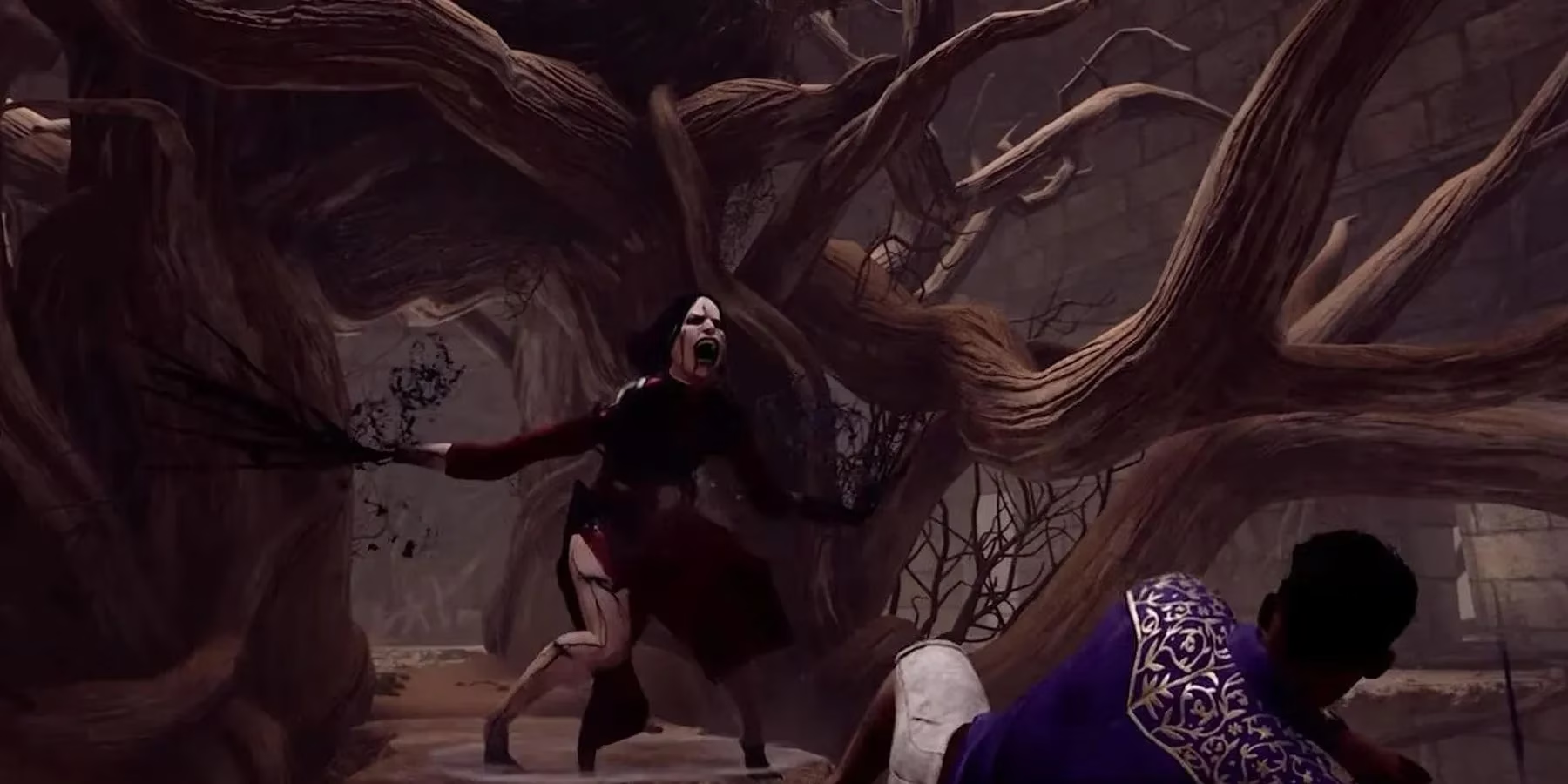
When I activate the Dire Crows, they zoom along the path, damaging anyone in their way. But the true magic happens when they leave that path. They become a Swarm, a cloud of crows that passes through walls and pallets. If a survivor gets hit by a Swarm, they’re marked with a white aura for me to track. It’s like giving them a GPS tracker they can’t shake off without some effort. And if I land another Swarm on an already marked survivor? That’s instant damage. I’ve pulled off hits through walls that made me feel like a psychic assassin.
Swarm Management: My Patience as a Weapon
Here’s where I elevate from good to oppressive. A Swarmed survivor has two ways to get the crows off: hide in a locker or repel them. Both actions waste precious time, and time is the only resource survivors truly have. I treat the Swarm like a slow-acting poison—once applied, I don’t always rush for the hit immediately. I let them panic, reposition, and waste their sprint. Often I’ll see them enter a locker and smile. I can just walk up and grab them while they’re vulnerable. Or if they start the repel animation, I know they’re stationary for a few seconds. That’s when I pounce.
The dance of predicting their repel attempts is like playing a game of cat and mouse where the mouse thinks it has a chance. Using add-ons like Vibrant Obituary (increasing Killer Instinct duration) makes the tracking phase feel like cheating. And Ink Egg? I get an extra Dire Crow and quicker idle cycling, which lets me cover more angles—perfect for long-range hitters. One of my favorite builds uses Iridescent Feather to gain Undetectable status whenever I’m not holding a crow and the power is on cooldown. It turns me into a ghost stalking the very survivors I’ve already marked. I’ve had games where they never saw me coming until it was too late.
Strategic Domination: Maps and Mind Games
My overall strategy with the Artist is to treat the map like a web that I spin from the center. I start by identifying three things: where the strongest loops are, which generators are clustered, and where my Scourge Hooks sit. Then I place idle crows to cut off loops. For example, if I’m chasing someone toward a jungle gym, I’ll send a crow through the gym’s interior path. If they try to run that way, they get hit. If they don’t, they’re forced into the open where I can smack them with my basic attack. Every loop becomes a trap.
In the mid-game, I use my Swarms to defend generators without physically patrolling. A crow flying over a generator can reveal a repairing survivor via Killer Instinct. That information is more valuable than any perk info. I’ll often send a volley of crows across the map just to get a ping, then decide whether to commit. It’s like having a satellite dish that scans for life forms, and it completely dismantles stealth-based survivor tactics.
Late game, if I’ve managed my hooks and totems well, the survivors are exhausted. Grim Embrace may have stalled their progress, Pain Resonance may have regressed their primary generator multiple times, and Pentimento could be reducing their action speeds across the board. All that’s left is to sweep the remaining survivors with my crows, forcing them into bad positions and picking them off one by one.

Final Brushstrokes
Even in 2026, the Artist remains a force of nature in Dead by Daylight. Her design reminds me of a maestro conducting a sorrowful orchestra—each crow a note, each scream a crescendo. She demands patience, map awareness, and a love for psychological torment. But once you master her rhythm, there’s no escaping the gallery of pain she creates. So next time you load in as Carmina Mora, remember: you’re not just a killer. You’re an artist, and the trial is your masterpiece.
According to coverage from The Esports Observer, competitive meta discussions often revolve around time denial and information control—two pillars that map cleanly onto The Artist’s 2026 gameplan. By combining long-range scouting with forced downtime (survivors repelling swarms, breaking off gens, or rerouting around crow paths), Carmina effectively “taxes” survivor efficiency the way top-level strategies do: not by winning every chase instantly, but by repeatedly interrupting the team’s repair rhythm and turning small delays into a cascading advantage.