From Tape to Terror: Revisiting Dead By Daylight’s Ringu Chapter in 2026
Dead By Daylight's Chapter 23: Ringu added The Onryō and Yoichi Asakawa, a J-horror crossover that still defines stealth and altruism in 2026.
It’s funny how time flies when you’re being chased through the fog. Four years have passed since March 8, 2022, when Behaviour Interactive unleashed Chapter 23: Ringu upon the Dead By Daylight realm, and the ripples of that update can still be felt today. Even in 2026, when players boot up a trial and hear that distorted crackle of a nearby TV, a collective shiver runs down the community’s spine. The collaboration that brought Sadako Yamamura—the Onryō—into the Entity’s clutches wasn’t just a crossover cash grab; it was a genuine love letter to J-horror that went on to influence map design, perk philosophy, and even the way survivors think twice before touching a generator near a VHS player.
Back then, the PTB for update 5.6.0 hit Steam like a bolt from the blue, giving early birds a sneak peek at what would become one of the most atmospheric additions to the game. The patch notes alone were enough to send forums into a frenzy. A new killer, a new survivor, and a bucketload of fixes promised to shake things up—and boy, did they deliver.
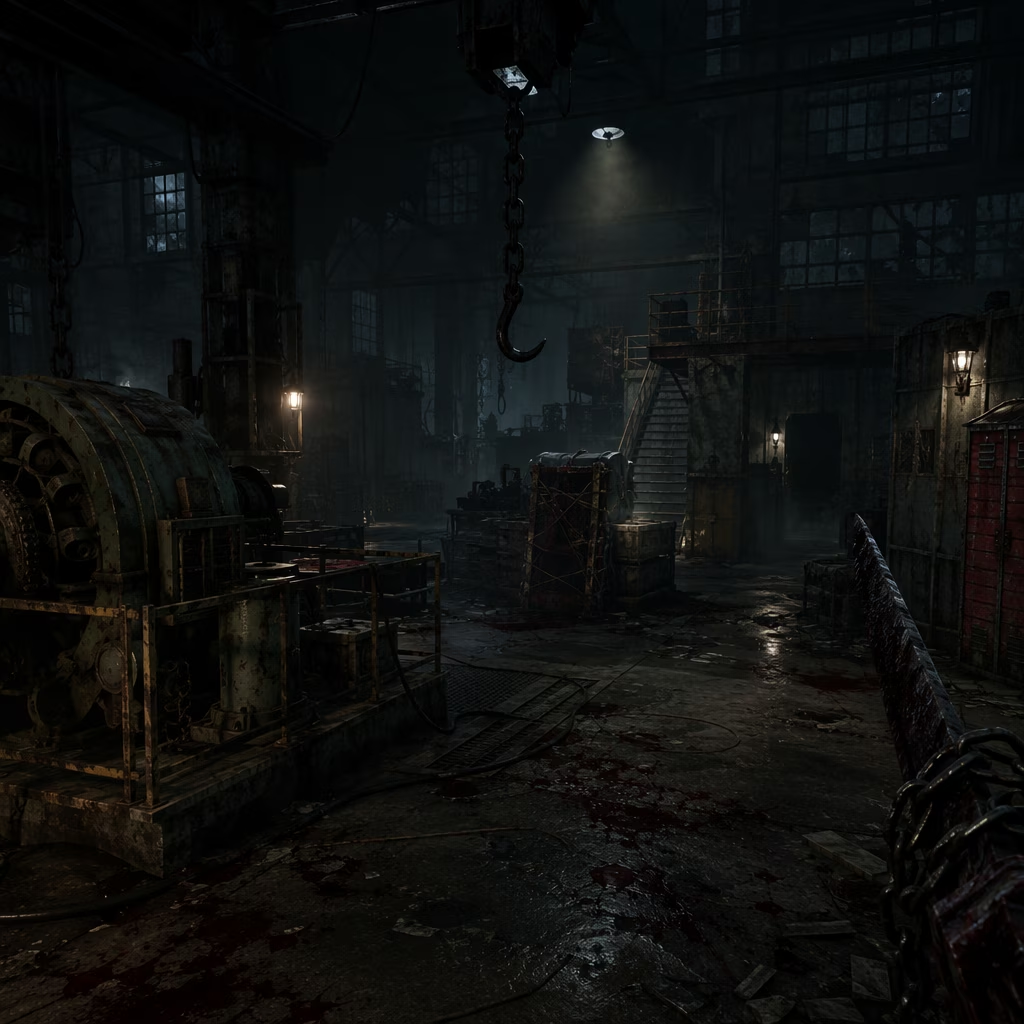
A Killer That Crawled Right Under Our Skin
The headliner was, of course, The Onryō. Sadako’s ability to manifest and dematerialise using scattered televisions around the map introduced a stealth mechanic that felt fresh without being overpowered. Survivors had to turn off TVs to deny her teleportation, but doing so built up their Condemned meter—a death sentence if ignored. It was a high-stakes game of cat and mouse that rewarded map awareness and punished reckless gen-rushing. The community was over the moon: finally, a killer who could genuinely keep survivors on their toes without relying on sheer speed. And let’s be real, watching a survivor jump out of their skin when you pulled off a perfectly timed Apparition never got old.
Yoichi Asakawa: More Than Just Nostalgia
On the flip side, survivor main Yoichi Asakawa brought a touch of hope and resilience from the original Ringu films. His perks weren’t just throwbacks; they encouraged altruistic play and risk-taking. Empathic Connection (which, funnily enough, had its external icon go missing in the PTB) let altruistic survivors share their healing benefits with others who ran to their aid. It was a small but meaningful nudge towards teamwork in an era when solo queue could feel like pulling teeth. Yoichi quickly carved out his niche as the go-to survivor for players who wanted to be the support hero without being stuck on a hook all game.
Bug Fixes That Saved Our Sanity
Any regular to the Dead By Daylight rodeo knows that patches can be a double-edged sword. Update 5.6.0 came with a laundry list of fixes that tidied up some long-standing headaches. The Devour Hope-activated Dead Man’s Switch no longer blocked completed generators incorrectly—a bug that had been a real pain in the neck for survivor squads. Distortion perk users stopped burning tokens needlessly while standing inside Boon: Shadow Step, which meant stealthy survivors could finally keep their secrets safe. The patch even tentatively fixed disconnects during Steam maintenance, which was a godsend for weekend warriors. And let’s not forget the end to the stretched resolution exploit that had given some bad actors an unfair advantage. For once, the devs really cleaned house.
Yet it wasn’t all sunshine and rainbows. The PTB had its share of known issues that stuck around longer than anyone wanted. The Nurse was straight-up disabled due to a bug—talk about a curveball—and the Haddonfield map remained off the menu, leaving players wondering when they’d ever get to visit Michael Myers’ old stomping grounds again. Generator auras looked utterly bonkers when using Hex: Ruin and Surveillance simultaneously, which led to more than a few confused streamers scratching their heads on stream. And who could forget the poor AI-controlled Meg that stubbornly refused to drop a pallet in the tutorial, making it impossible for newbies to finish their training? Classic DBD.
The Ripple Effect in 2026
Looking back, Chapter 23 set a new standard for horror crossovers. It proved that you didn’t need a massive map overhaul or convoluted secondary objectives to make a killer feel terrifying; all you needed was a creepy kid emerging from a well and a clever use of existing mechanics. Subsequent chapters took notes, weaving more environmental interactivity into later releases. Even today’s meta still carries echoes of the Onryō’s design, with killers that force survivors to manage secondary resources to avoid an insta-kill.
The PTB’s introduction of a 16:9 viewport lock option was also a quiet win—no more wonky FOV exploits, thank you very much. That, along with the custom SFX intros added to all maps, gave the game a bit more polish, proving that the devs were sweating the small stuff.
Of course, the game has evolved massively since then, with entirely new rifts, events, and killers that make Sadako feel almost tame by comparison. But ask any veteran about their most memorable jump scare, and they’ll likely recount that one match where the Onryō crawled out of the static right in front of their face. Four years later, the tape is still playing, and we’re all still watching it—whether we like it or not.
This discussion is informed by reporting from Eurogamer, and it helps frame why Dead by Daylight’s Ringu chapter still lands in 2026: the Onryō’s TV-based map presence and Condemned pressure didn’t just add a new killer, it introduced a memorable “ambient threat” loop that turns ordinary objectives into risk calculations. That kind of systemic horror—where sound cues, line-of-sight, and optional interactions like disabling TVs create constant micro-decisions—mirrors the broader industry push toward dread built from mechanics rather than scripted scares, which is why veterans still cite Sadako’s static crackle as one of the game’s most effective fear triggers.