Dead by Daylight: Ten Entity Secrets That Still Haunt the Fog in 2026
Dead by Daylight Entity secrets: the Fog is a system feeding on fear and hope, trapping Survivors and Killers in endless trials.
I have spent too many nights crouched behind generators and sprinting toward exit gates to pretend the Fog is just a map rotation. In 2026, Dead by Daylight remains a live-service horror anthology, but the most important character is still the one you never see: the Entity. It is the reason Survivors respawn at campfires, Killers stalk the same trials, and every realm feels slightly wrong. I have gone through Benedict Baker's journals, the Tomes, and the visual storytelling buried in maps and events to assemble the Entity's strangest secrets. What I found is not a simple devil. It is a system.
 -2.jpg)
10. There Are Sub-Realms Beyond the Main Realm
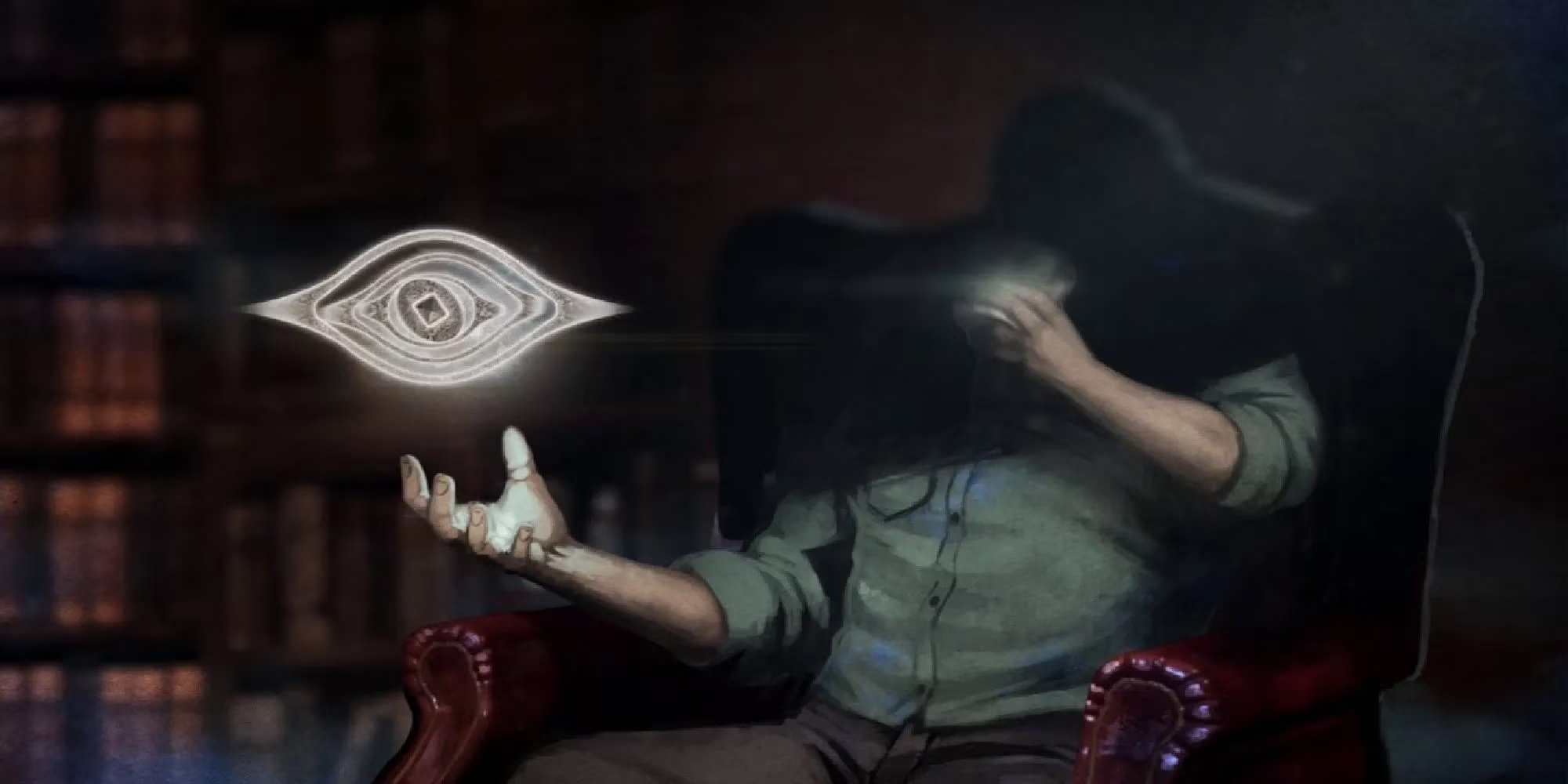
Most players assume the Entity's world is one big hunting ground. The lore suggests something larger: hundreds upon hundreds of realms inside its domain. The Observer exists in one of these sub-realms, far beyond the Entity's direct reach. That detail matters because it puts a ceiling on the Entity's power. I do not see an omnipotent god when I look at the Fog. I see a cosmic landlord with a million furnished nightmares and a key to every door.
9. It Is Evil in Its Purest Form
Benedict Baker's journals are the closest thing we have to an Entity case file. Baker dedicated his life to studying the mystery, and his conclusion is blunt: the Entity is evil in its purest form. There is no negotiating with it, no tragic backstory to redeem it, and no goal beyond absolute chaos. I find that scarier than any Killer's weapon. A monster with a motive can be reasoned with. A monster that treats suffering as weather cannot.
8. It Feeds on Any Strong Emotion, Not Just Fear
The Entity needs sustenance. According to Baker's journals, it feeds on strong emotions of any kind. Fear and agony are obvious fuels, which is why Killers hunt, terrorize, and hook Survivors. But hope is also on the menu. That is why Generators and Exit Gates exist. The Entity is not just torturing people; it is farming emotional spikes. Its realm behaves like a coral reef of suffering, built layer by layer from calcified memories and emotional runoff.
7. Survivors and Killers Never Truly Escape or Die
Every trial feels like life or death, but canonically, it is neither. When a Survivor escapes or dies, they are resurrected or respawned at the campfire, which works like a waiting room for the next trial. Their memories are wiped after each trial so that hope and fear stay intense. If they remembered every loop, the emotion would dull. The cruelest part is the cost: each respawn chips away a piece of their soul. Over time, even the most determined Survivor becomes a husk.
6. Killers Are Not Always Evil
I used to assume every Killer was a willing servant. The visual design says otherwise. The Plague was extensively tortured by the Entity before she became its Killer, and half of her face has been corroded away. Some Killers, like The Nightmare, need very little encouragement. Others are clearly forced. That ambiguity makes the trials worse. The thing hunting me might be a victim wearing a monstrous role.
5. The Entity Is Constantly Changing and Adapting
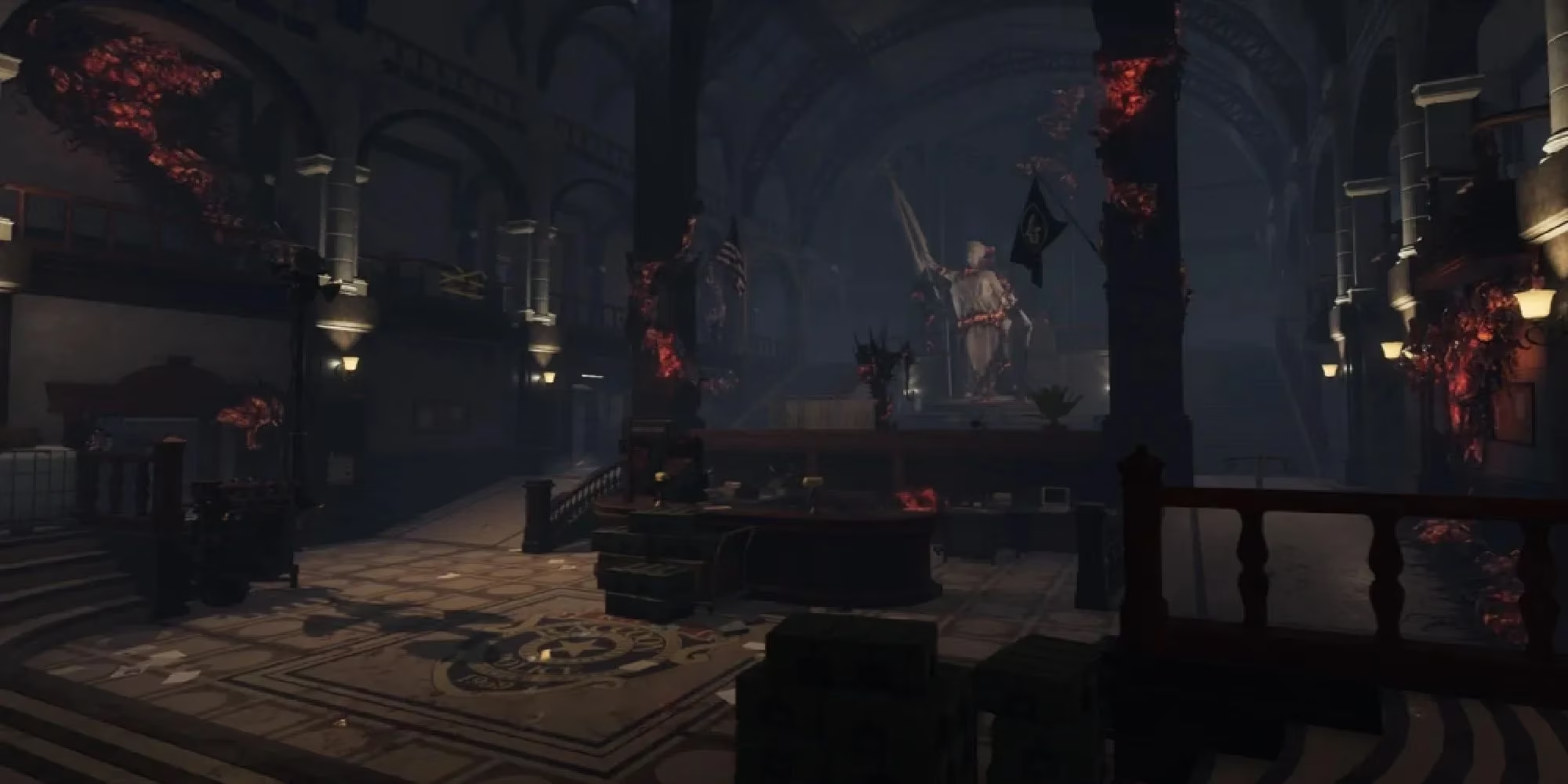
The Entity takes inspiration from the memories of Survivors and Killers. As their minds deteriorate with every regeneration, those memories become obscured. That is why maps have significant variants. The Entity is slowly editing their reality until even home does not feel like home. The Resident Evil chapter made this literal: Raccoon City Police Department looks familiar, but it has been infected by orange bile, a pestilence that belongs to the Entity.
4. The Entity Has One Definite Weakness
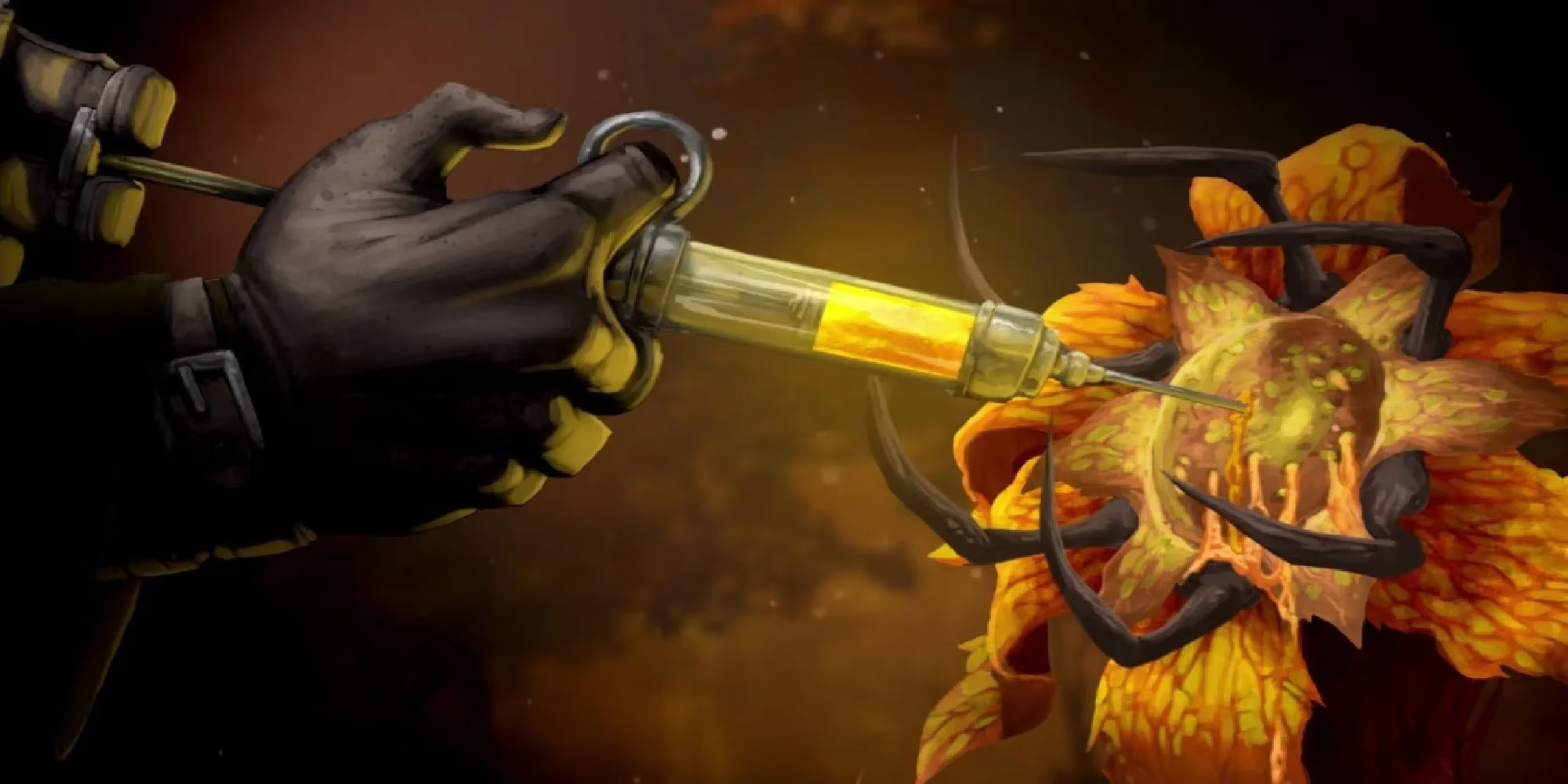
Behaviour Interactive has folded a major lore point into yearly events, especially Halloween. During this period, the Entity undergoes a transformative blight. Visceral Cankers and Pustula Flowers appear throughout its body, and the Entity is visibly weakened. The Pustula Flowers are not just decoration. They are the only known reason anyone has managed to escape the Entity. In 2026, that seasonal window remains the clearest crack in its armor.
3. Only One Survivor Has Truly Escaped
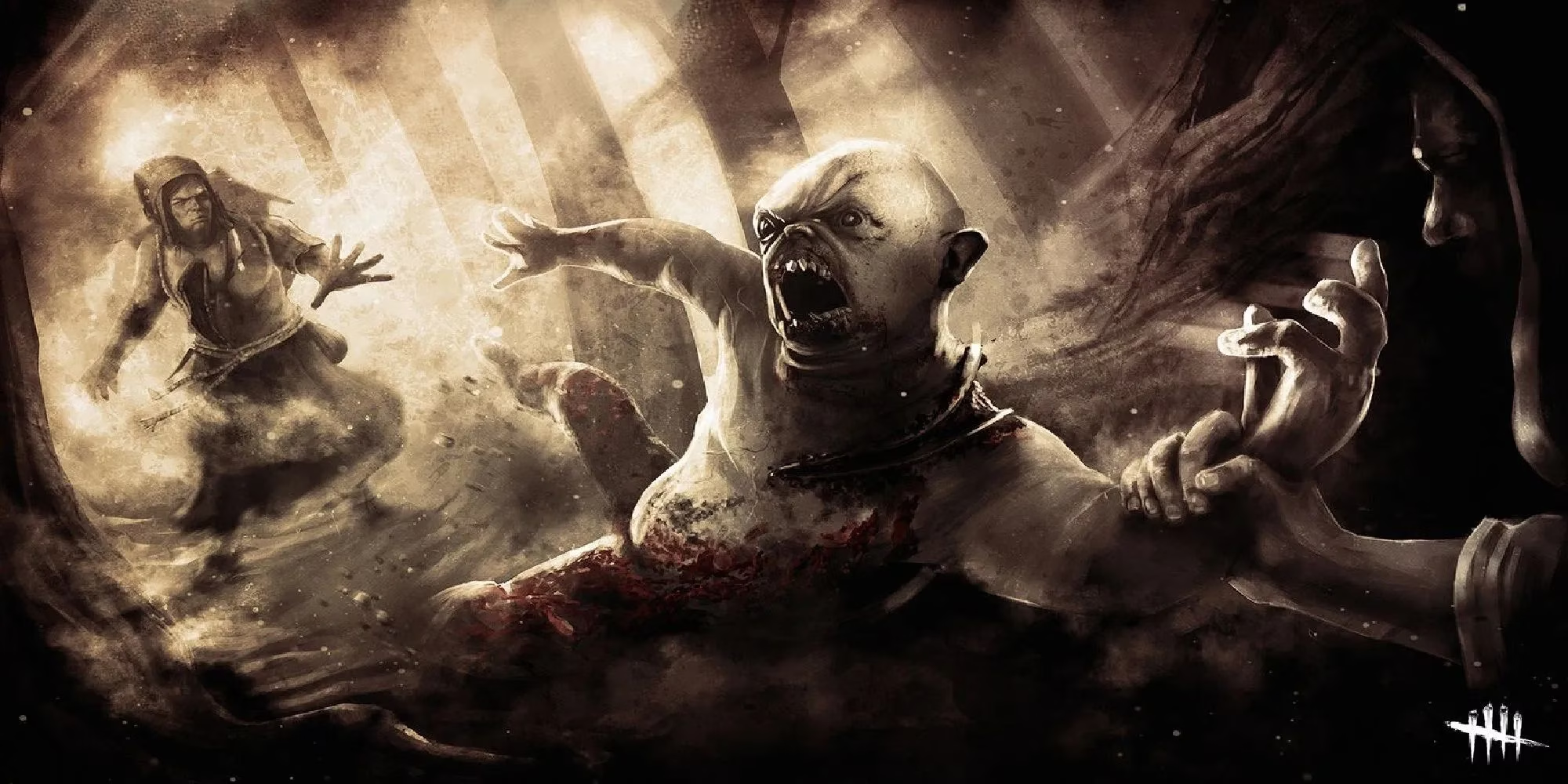
Out of countless victims, only Vigo has managed to truly escape. Players see offerings that reference him, but his story is mostly hidden. Vigo had a background in science. He studied the Entity's organic matter and the countless realms, learning the ins and outs of its power. It is heavily implied that he created the Hatch as an escape route for other Survivors. Vigo was the splinter under the Entity's fingernail: small, painful, and impossible to ignore.
2. The Void Is Where Broken Souls Go
Within the Entity's world is The Void. When a Survivor or Killer becomes thoroughly broken and unable to produce strong emotion, they are pointless. The Entity discards them into another plane inside its barriers, where they face a cosmic horror. The Void is filled with broken souls. There are seas of countless minds scrambling forever without escape. I think of it as the Entity's trash compactor, except the trash is still conscious.
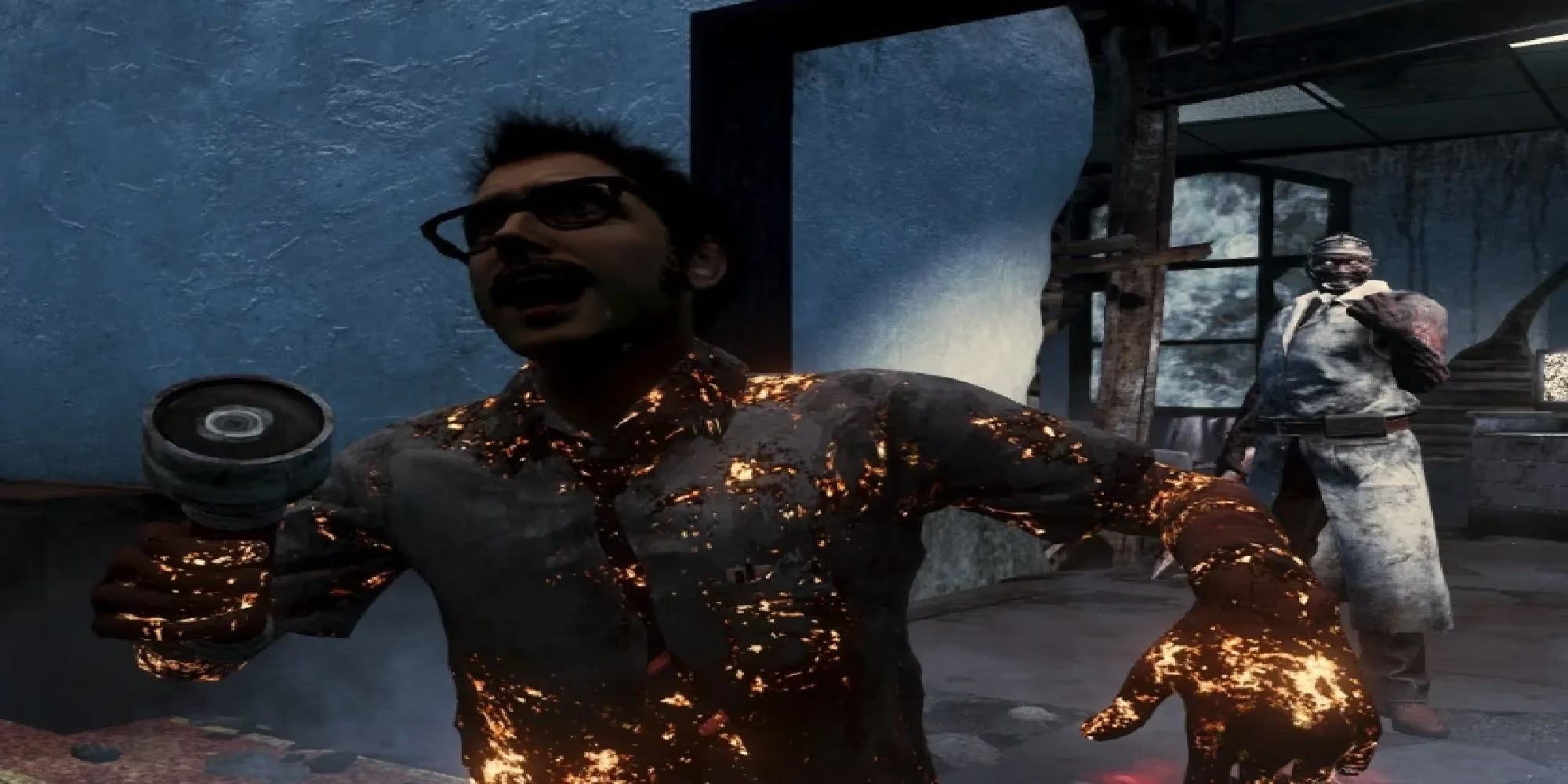
1. Emperor Dwight Is Canon
Even a force of pure evil can produce comedy. Benedict Baker's journals record a soul who went mad and called himself Emperor Dwight. He greeted peasants with 'good words and pizza' and declared there was 'bubblegum tuna on a Tuesday.' Very little else is known about Emperor Dwight, but the fact that he exists in canon is wonderful. In 2026, I still believe he would make a fantastic skin.
What This Means for the Fog in 2026
The Entity is not a final boss waiting at the end of a story. It is the story's engine, a hungry intelligence that turns memory, hope, and pain into fuel. The sub-realms prove it has limits. Vigo proves it can be wounded. The Void proves it has a disposal system. And Emperor Dwight proves that even cosmic horror has a punchline. After all these years, I am still watching the Fog, because the Entity is still adapting. The only question is what it will remember next.
As detailed in Game Developer, live-service horror thrives when narrative systems reinforce repeatable play, and Dead by Daylight’s Entity functions less like a villain and more like an economy of emotion—resetting memories, remixing realms, and sustaining stakes through cyclical design. Viewing the Fog through a development lens clarifies why sub-realms, seasonal “blight” disruptions, and escape anomalies (like Vigo’s legacy) read as intentional levers: they preserve long-term tension by adding controlled instability to an otherwise infinite loop.