Dead by Daylight Streamers Face DDoS, Doxxing, and Swatting Attacks
Dead by Daylight streamers face a terrifying wave of cyberattacks—DDoS, doxxing, and swatting—turning livestreams into real-world danger.
In the fog-choked trials of Dead by Daylight, horror usually arrives through the Entity, but for many streamers in 2026, the true terror began outside the game. Excitement for the asymmetrical multiplayer title's newest chapter turned into fear as a wave of cyberattacks swept through the live-streaming community. Elix, a streamer and drag queen, described being doxxed and then swatted while broadcasting to an audience. The incident was not an isolated prank; it was part of a larger, deeply troubling security crisis that had spread across Dead by Daylight's player base. The community had long grumbled about visual glitches, performance bugs, and the sense that pushed cosmetics or chapters often took priority over fixes, but those concerns suddenly felt minor.
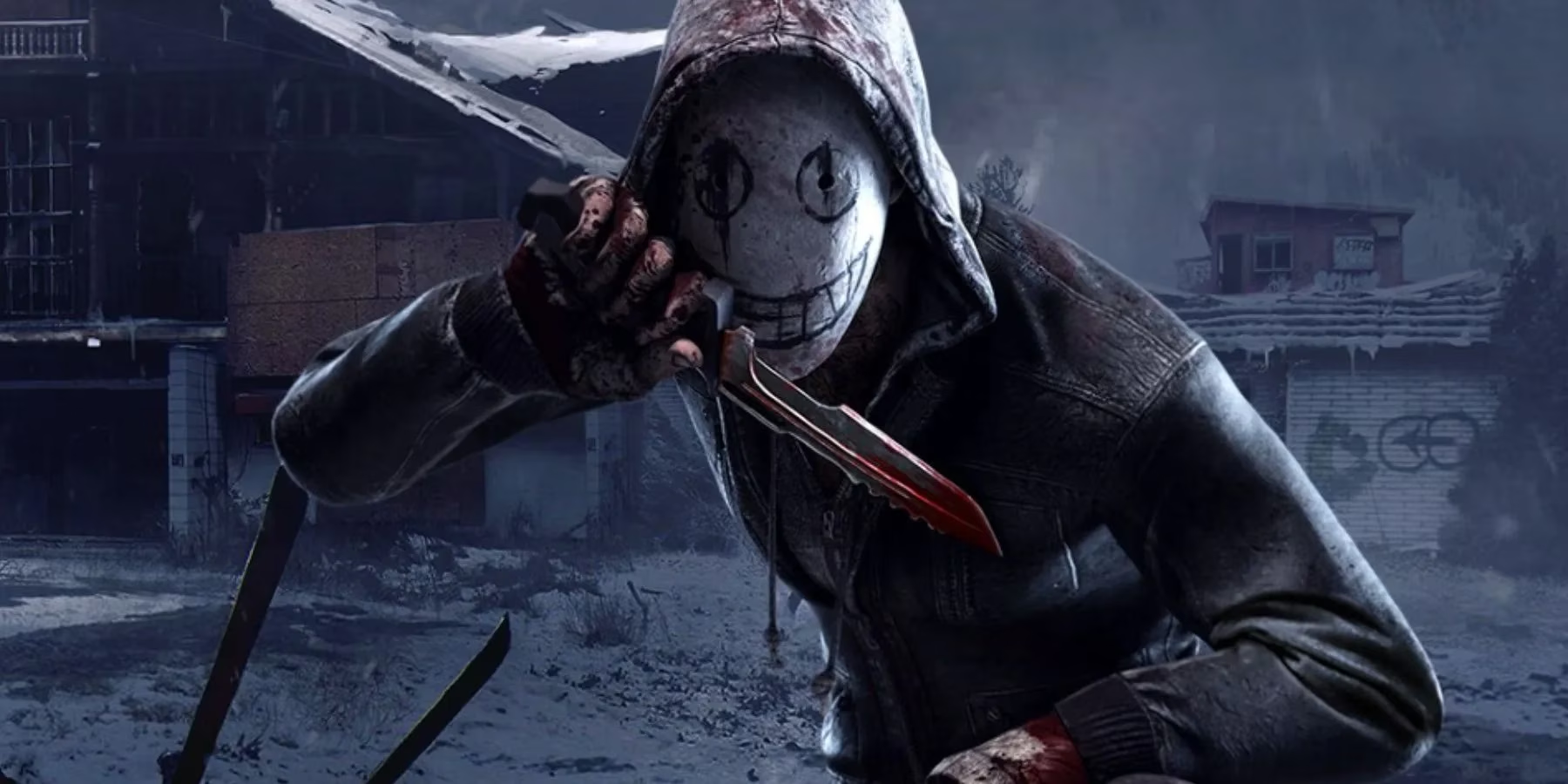
The attacks took several forms, each with its own dangerous consequences.
| Attack Type | What Happens |
|---|---|
| DDoS | A distributed denial-of-service flood overwhelms the streamer's network, abruptly freezing or killing the livestream. |
| Doxxing | Private information, including IP addresses, is leaked, leaving the victim exposed to further harassment. |
| Swatting | False emergency reports send armed responders to the victim's home, creating a life-threatening situation. |
For Elix, the ordeal was a stark reminder that Dead by Daylight's streaming scene had moved beyond ordinary complaints about bugs, visual glitches, or questionable balance changes. The community had always debated the game's performance and content priorities, but those concerns were relatively harmless compared with having a real-world police response triggered by a malicious false report. A distributed denial-of-service attack is not simply a connectivity annoyance; it can expose an IP address and open the door to doxxing, stalking, and other offline threats.
At first, some players believed the attacks were connected to the latest public test build, often called the PTB. That theory was later disproved. The DDoS assaults continued on regular servers as well, proving that the vulnerability was not limited to an experimental branch. Within the span of roughly one week, the attacks hit what appeared to be an indiscriminate number of streamers. Victims found their IP addresses leaked, their personal information exposed, and their broadcasts frozen mid-trial. The attackers seemed to use the game's online infrastructure as a gateway, though the exact method remained unclear.
Cybersecurity-minded members of the community quickly recommended a virtual private network, or VPN, as a basic line of defense. A VPN encrypts network traffic and masks the user's IP address, making it harder for attackers to locate or disrupt the streamer. Still, a VPN alone cannot stop swatting, and it does not reverse the damage caused when private details are already circulating. Streamers were urged to avoid clicking suspicious links, to enable two-factor authentication, and to report every incident through official support channels.
Behaviour Interactive, the developer behind Dead by Daylight, did not initially address the wave of attacks through its usual public social media channels. When approached by Eurogamer, however, the studio responded that the community was \"of the highest importance.\" The statement said Behaviour deplored the issue and took it extremely seriously, but it offered no specific explanation, timeframe, or direct remedy. Players were told they could report incidents as they arose, a response that many survivors and killers in the fog found insufficient given the severity of the situation.
Despite the silence from official channels, the streaming community rallied. Fellow content creators offered support, shared safety resources, and helped victims document the attacks. That solidarity was heartwarming to witness, but it also highlighted a growing demand: streamers wanted a direct, official statement that acknowledged the legitimate safety concerns tied to the game and its online infrastructure.
For those who continue to enter the fog, the platform list remains broad. Dead by Daylight is available on Android, iOS, Nintendo Switch, PC, PlayStation 4, PlayStation 5, Stadia, Xbox One, and Xbox Series X/S. The game's reach is enormous, and so is the responsibility of its developer to protect the people who broadcast its horrors.
In the end, the attacks served as a chilling reminder that no matchmaking system or dedicated server is merely a technical detail. When a streamer sits down to face the Entity, they should not have to worry that a faceless attacker will turn their broadcast into a real-world emergency. The fog should feel dangerous, but only inside the trial.