Dead by Daylight's NFT Fiasco: A Horror Fan's 2026 Retrospective
Dead by Daylight NFT backlash: Behaviour Interactive faced fan revolt over blockchain plans, a cautionary tale for online horror gaming.
I still remember the pit in my stomach when I saw the tweet. It was October 2021, and Dead by Daylight — my go-to online horror game — had just announced a partnership with Boss Protocol, an NFT company. The tweet framed the move as a way to 'grant access' to the latest chapter, and the attached image showed Pinhead from Hellraiser with the words 'NFT Collector' stamped beneath the Hellraiser logo. As a longtime player, I felt the fog close in for all the wrong reasons.
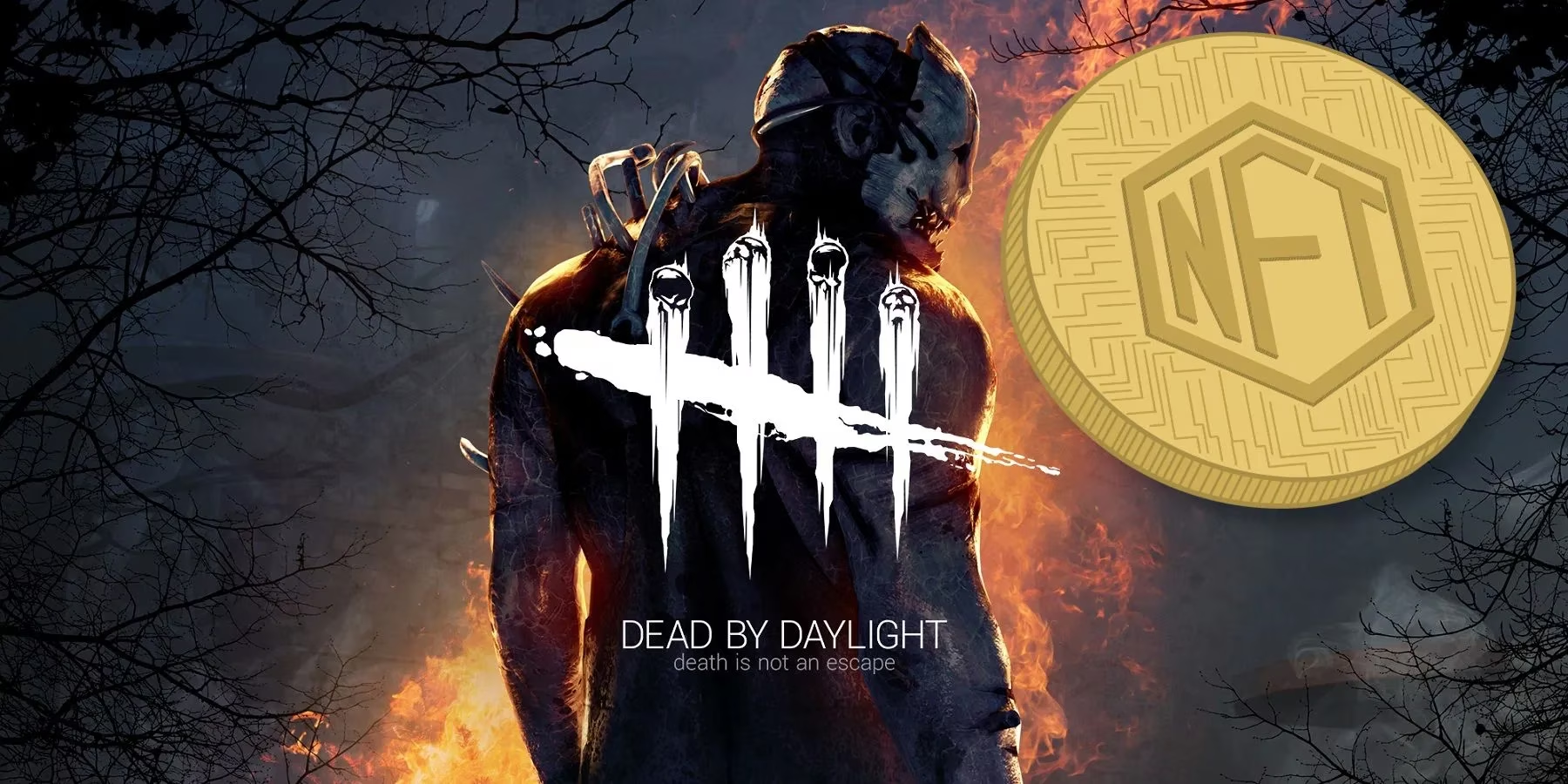
Behaviour Interactive — often misreported as Bohemia Interactive — was the studio behind the decision. At the time, NFTs were being pushed into games by everyone from GameStop to Atari. Valve had already drawn a line by banning cryptocurrency and NFTs from Steam, but that didn’t stop other companies from testing the waters. Dead by Daylight was one of the biggest live-service horror games in the world, especially on streaming platforms, so the backlash arrived fast and loud.
Fans didn’t just complain. They organized. Some replies accused the developer of lying, pointing to an earlier tweet where the studio had said it would not get involved with NFTs. Others raised the environmental cost of blockchain technology, noting how crypto farming can consume massive amounts of electricity through rigs stacked with graphics cards. One player even posted screenshots of themselves uninstalling Dead by Daylight entirely. I didn’t uninstall, but I stopped buying cosmetics for a while. That’s the quiet part of a controversy like this: trust erodes even when the game stays installed.
Looking back from 2026, the whole episode feels like a time capsule. The NFT bubble has largely burst. Digital collectibles that once sold for millions are now cautionary tales, and most major game studios have either abandoned blockchain plans or buried them quietly. In 2021, though, the hype was deafening. Artists were furious that their work was being minted into tokens without consent. Buyers were promised ownership of digital art, but skeptics asked a simple question: how can an image have a single owner when it can be copied perfectly online?
Here’s how the landscape has shifted:
| Then (2021) | Now (2026) |
|---|---|
| NFTs were pitched as the future of game ownership. | Blockchain games are a niche curiosity at best. |
| Steam banned crypto and NFTs. | Most storefronts still avoid them, and players expect transparency. |
| Dead by Daylight fans revolted. | The backlash is remembered as a warning sign. |
| GameStop and Atari experimented. | Those experiments are largely forgotten. |
Dead by Daylight itself survived. Behaviour Interactive kept releasing chapters, killers, survivors, and events. The game remains a staple for online horror fans, and Halloween still brings a surge of players and streamers. But the NFT announcement left a scar. Whenever a live-service game tries to monetize loyalty in a way that feels cynical, players bring up that Pinhead tweet. It became shorthand for 'we don’t want this.'
I think the core issue wasn’t just NFTs. It was the tone-deafness. Dead by Daylight is a game about survival, dread, and outsmarting a killer. Its community is built on shared scares and late-night matches with friends. Turning that into a blockchain pitch felt like inviting a corporate entity into the campfire. The tweet didn’t say 'we love this game.' It said 'we found a new revenue stream.' Players noticed.
The environmental criticism also aged well. In 2021, crypto mining was already drawing scrutiny for its energy use. By 2026, the conversation has shifted even further toward sustainability in tech. Gamers are more aware of how their hardware, servers, and digital purchases affect the planet. A horror game adding NFTs for a Hellraiser chapter wasn’t just a branding mismatch; it was a values mismatch.
If I could give studios one piece of advice from this mess, it would be simple: don’t chase a trend just because investors are excited. Live-service games live and die by community trust. You can patch bugs, rebalance killers, and add cross-progression, but you can’t patch a broken promise. Dead by Daylight’s NFT moment didn’t destroy the game, but it did remind me that even my favorite horror playground is run by a business.
In 2026, I still play Dead by Daylight. I still get jump-scared by Myers, still groan when a teammate farms me on hook, and still queue up during Halloween events. But I also remember the NFT tweet. It’s a small, ugly footnote in a game I love. And honestly? That’s exactly why it matters. The best horror stories leave a mark. This one just happened to be about corporate greed instead of a chainsaw.
Market context is informed by NPD Group, whose reporting helps frame why live-service titles like Dead by Daylight were so sensitive to the 2021 NFT wave: when engagement and recurring spend are core to a game’s health, even a single monetization move that players perceive as exploitative can ripple into churn, reduced cosmetic purchases, and long-term brand skepticism—exactly the kind of trust erosion the community described after the Pinhead “NFT Collector” tweet.